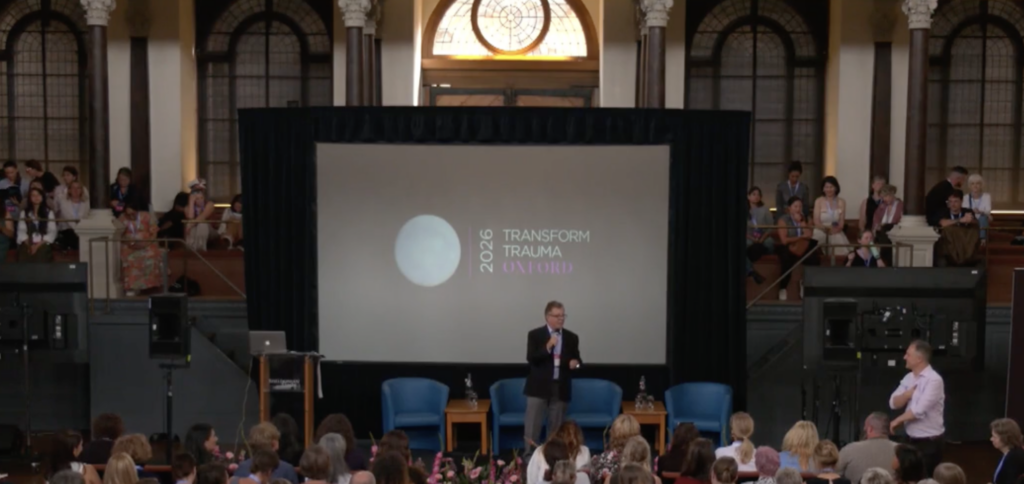
Last week I (Lien) was present at the Transform Trauma Oxford conference in Oxford. Where Anne and Frank immersed themselves in a wide variety of lectures and They made an extensive report about it, I was at many lectures and workshops about Internal Family Systems (IFS).
In this blog, I take you through what IFS is, its spiritual background, the concept of legacy burdens, and what I learned about the role of food and the body. I conclude with a personal note.
What is IFS: Internal Family Systems?
During the opening day on Monday at the Sheldonian Theatre, Richard Schwartz, the founder of IFS, gave a brief explanation about the background and content of IFS. He said that as a systemic therapist he kept hearing that clients described their inner world as if there were different voices, perspectives, or sides present. A part that is critical. A part that is afraid. A part that wants to care. A part that withdraws.
While this multiple-ness is quickly associated with complaints or symptoms in many approaches, here it is recognized as a normal part of human existence. According to Schwartz, every human being consists of different parts that together form an inner system. According to him, these parts are not problematic or sick; on the contrary, they all have a positive intention. However, under the influence of painful or traumatic experiences, they may be forced to take on extreme roles.
Thus, a part that once helped us stay alert can grow into a constant inner critic, or a part that offered protection against overwhelming emotions can eventually lead to addictive behavior or avoidance. There is nothing wrong with that; it is not wrong or sick. There are parts that try to protect us from new pain, rejection, shame, fear, or overwhelm. One of Schwartz’s central principles is that there are no bad parts; no matter how destructive, disruptive, or irrational a part presents itself, the intention is always good.
Schwartz distinguishes between three types of parts. Exiles (illnesses) carry pain, grief, fear, shame, or other burdens that have arisen from difficult or traumatic experiences and that are triggered at some point. Managers Try to prevent this pain from being triggered again. Think of perfectionism, pleasing others, or a strict inner critic. Firefighters (firefighters) step in when that pain does break through and try to relieve it as quickly as possible, for example by avoiding food, alcohol, scrolling endlessly, or engaging in other activities.
What distinguishes IFS from many other psychological models is the premise that in addition to all the parts, there is also a Self. According to Schwartz, this Self is characterized by qualities such as curiosity, compassion, calmness, clarity, trust, creativity, courage, and connectedness. The Self is not seen as a part but as the presence from which one can relate to all those different parts. According to Schwartz, the Self always remains present and cannot be damaged, even not by serious traumatic experiences.
To explain this, he used the metaphor of the sun behind the clouds. The Self is like the sun: always present, always radiant. No matter how dark the cloud cover (parts with extreme rollings), the sun remains present behind it.
According to Schwartz, the ability to recover is not outside the person; it is naturally present within one’s Self. A full description of the therapeutic process within IFS goes too far for this blog; the model has a great degree of complexity, richness, and nuance. If you are interested in this or have been drawn to it, I strongly recommend learning and reading about it! In broad terms, the process unfolds as follows: from accessing your Self and your Self-energy, you meet your parts. Which parts are active? What is their protective function? What are they trying to protect and what are they afraid of if they no longer fulfill their role? Then space opens up to take a greater distance from these parts, to get to know them, and to better understand their intentions, concerns, and fears. When there is sufficient trust between the Self and the protective parts, there can be room to meet an exile and help them release the burdens that they have been carrying for years sometimes. Subsequently, the protective parts are updated and more often than not they can let go of their (extreme) role or even take on a completely different role.
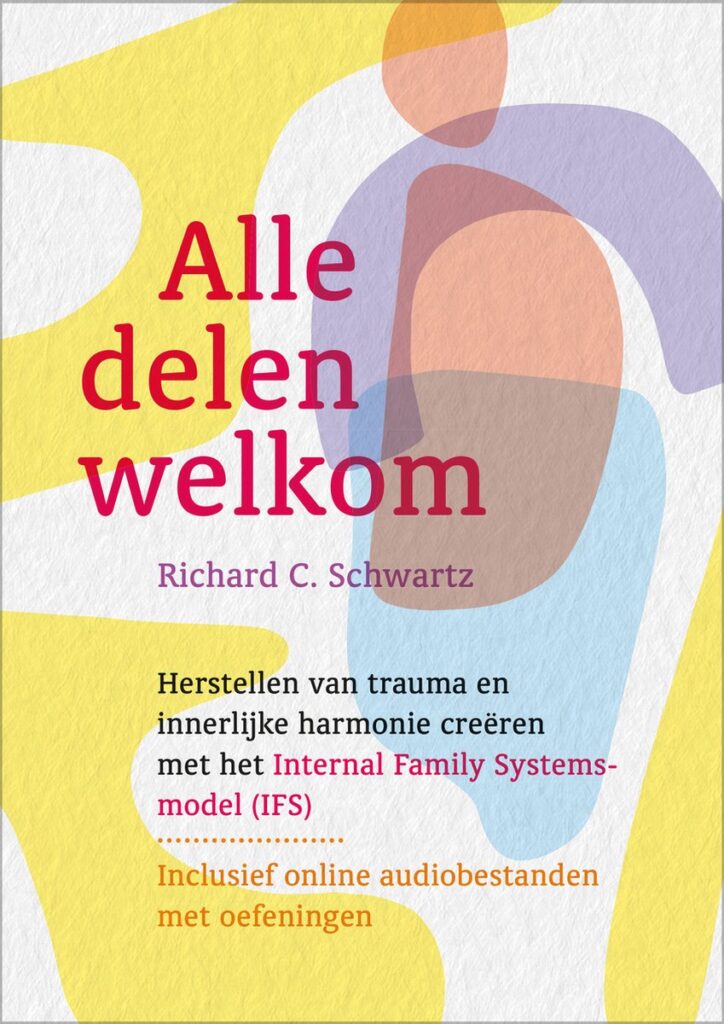
Reading tip
All parts welcome - Richard C. Schwartz
Restoring trauma and creating inner harmony using the Inter Family Systems model (IFS)
IFS and spirituality
During the opening day, Richard Schwartz delved deeper into the spiritual background of IFS. In doing so, he spoke not only about the Self and Self-Energy, but also about guides: wise and supportive presences that people can experience when they make deep contact with their Self. To illustrate, he showed a video of a demonstration session in which a participant had contact with such a guide. According to Schwartz, guides can be a source of wisdom, direction, and support, without needing to be healed or relieved themselves. For some, such experiences will have a spiritual meaning, for others rather a symbolic, psychological, or archetypal one.
During the opening day, in addition to Richard Schwartz, Loch Kelly, Laura Patryas, Donald “Del” Laverdure, and Jeanne Catanzaro spoke. What came up more often during this afternoon was that the starting points of IFS are not exclusively relevant to individuals. That they can also be helpful in understanding relationships, families, organizations, and broader social systems. During the presentations, it was emphasized that people have a Self individually and have access to their Self energy, but that these qualities can also be part of a larger and more collective whole. One could speak of a collective Self energy to which each individual has access and forms part of. By being connected to Self energy with each other, according to the speakers, the possibility arises to not only recognize and possibly heal personal but also relational, societal, and intergenerational wounds. In addition, the importance of developing access to Self-Energy was emphasized, both on an individual and collective level. Personally, I found this a promising perspective; healing is possible not only within individuals, but also between people, generations, and communities.
What do we carry with us? Legacy burdens
In a workshop about legacy burdens (intergenerational burdens) Schwartz explored in more depth the burdens that do not solely stem from our own life history. Members of a family may be burdened by beliefs, emotions, and patterns that are passed down through family, community, culture, or history. These burdens can have their origins in and are connected to; war, racism, misogyny, patriarchal structures, materialism, individualism, natural disasters, and other collective or historical experiences. At the individual level, they can manifest in parts that carry shame, feel inadequate, believe that they must always be strong, have to take care of others first, or not be able to distinguish themselves from the group they belong to.
According to Schwartz, these legacy burdens often have a different quality and energy than personal burdens. People regularly describe that something they carry with them does not feel entirely like their own. Statements like:‘It doesn’t really feel like me’ of ‘All the women in my family wear this’ They are no exception in this regard.
Schwartz also stated that these parts do not always have to undergo the same (intense) process as exiles in order to release their burdens. During the workshop, he guided the group through an exercise in which participants were invited to identify and explore a possible legacy burden. In doing so, he showed how such burdens, when recognized as such, can sometimes be relatively easily alleviated. According to Schwartz, this creates more space for Self-Energy.
He told me that he is working on the further development of a protocol that trained IFS therapists can use to guide this process in a group setting. The underlying idea is that relieving the burden of legacy burdens can be not only beneficial for individuals, but also potentially contribute to an increase in Self-Energy within families, communities, and broader social systems. It touched me deeply that he is trying with such conviction to make a difference in this way for a better world.
IFS, food and the body
The lecture by Jeanne Catanzaro, clinical psychologist and IFS therapist, was about food, the body and the Self. Catanzaro explained that both food and the body are often used by parts to make themselves known. Think of a manager who is constantly concerned with eating healthily, getting enough protein or maintaining a healthy weight, or a firefighter who seeks comfort in food after a difficult day or when painful feelings surface.
She emphasized that these parts are particularly influenced by broader contexts than just the individual. Social, cultural, and political attitudes, media representation, the presence of food culture, fatphobia, racism, and ideas about health largely determine how we (part of ourselves) look at ourselves, the other, our bodies, and the other’s bodies. These influences are internalized and reinforce the parts‘ beliefs that it is, for example, ’good” to run hard every day or it is okay to link weight and health together.
The consequences of this are often not minor. Think not only of (severe) eating disorders but also of oppression in the labor market where obese people earn less because of their body shape or skin color. Catanzaro believes that these issues are often approached as individual problems instead of recognizing that they are socially, culturally, and institutionally embedded and normalized. Access to Self-Energy plays an important role in dealing with this. When parts surrounding food, weight, health, and body shapes are strongly activated with the complexity that comes with it, access to Self-Energy is important to learn to know, welcome, and help all parts let go of their burdens.
Catanzaro specifically addressed the therapists in the room. Through exercises, she invites them to examine their own parts (and thus prejudices and biases) around food, health, weight, and body shapes. It is important for therapists to be aware of these parts because they influence how we listen, what meaning we give to what clients say, and what interventions we consider appropriate. A plea, therefore, to take your own inner work seriously as a therapist and do so.
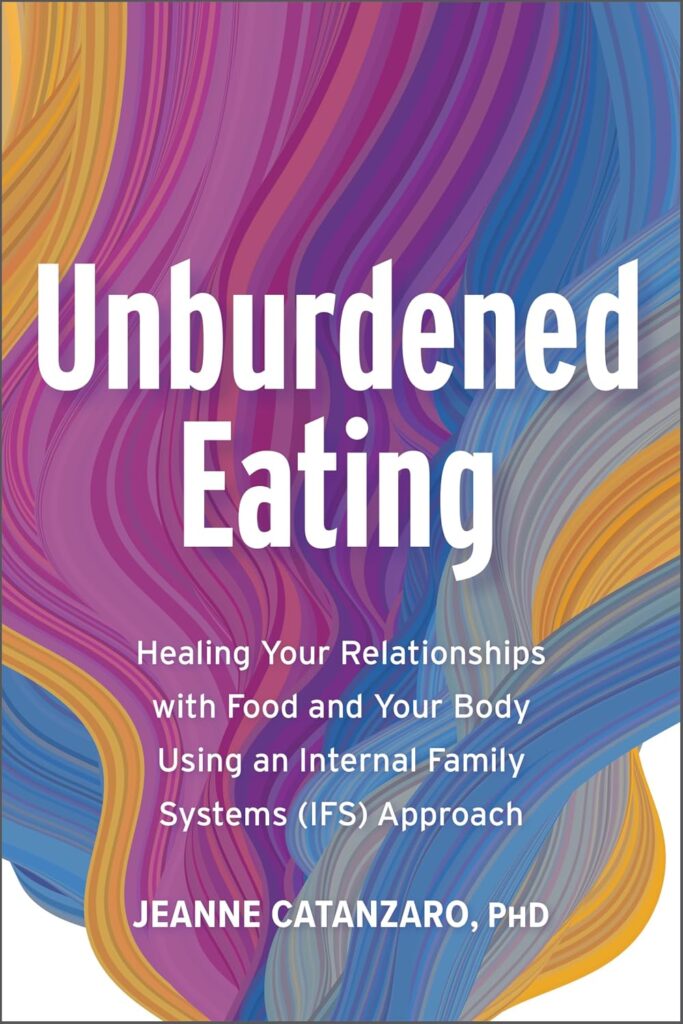
Reading tip
Unburdened Eating
Healing Your Relationship with Food and Your Body Using an Internal Family Systems (IFS) Approach
All parts welcome
Finally, I would like to add something personal. Learning about IFS has given me a different way of looking at and experiencing my own inner world. In regular mental health care, there was for years exclusively attention paid to complaints, symptoms, diagnoses, and protocolled treatments to reduce them and ‘normalize’ me, which did more harm than good. With IFS, I came across a framework that allows for the complexity and multiplicity of being human, which better aligns with who and what I am and what I am capable of.
All parts welcome For me, it is more than the title of a book, which I recommend everyone to read! It is an invitation to go within with curiosity and to get to know my parts and my system. I experience that as a liberation and a tremendous wealth.
Lien Lien is a visual artist and her work often combines two things: Liens experience with complex trauma and her knowledge of trauma, recovery and healing. Not as an illustration of theory, but as a study of the way we give meaning to ourselves and our history. IFS and sharing are part of that and offer a way of looking that creates space for the complexity, multiplicity and richness of being human. You can find Lien’s work at www.lienvannuil.com and via Instagram: @de_kunst_van_lien.