What is Rebalancing?
Rebalancing focuses on gaining more contact with the body and the emotional world and aims to teach people to become loving and unjudgingly present to what is happening ‘from within’. Through this presence, a new balance can be achieved between the body, mind, and soul, between thinking, feeling, and being.
Rebalancing involves touch, self-exploration, meditation, and various forms of bodywork. The approach is based on Western forms of bodywork and Eastern meditative principles.
Through Rebalancing, you can come into contact with unconscious patterns and unprocessed (traumatic) experiences; you will learn to feel and be present more deeply in these. By going there, letting go could unfold naturally.
How did Rebalancing come about?
Rebalancing originated in the 1970s in the Eastern growth and meditation center of the spiritual master Osho. Around Osho, Western bodyworkers and therapists with various expertise (such as Rolfing, Feldenkrais, Trager, Alexander Technique, Craniosacral Therapy, and bioenergetics) gathered. Rebalancing emerged from the fusion of these Western forms of bodywork combined with Osho’s Eastern meditative approach.
Pioneers Rob Merkx, Jeanine van Deursen and the late Barbara van Rooyen met each other during their Rebalancing training in Italy and brought this method to the Netherlands. In 1989 they founded the Dutch training program for Rebalancing. The School was renamed the Rebalancing Center.
How does Rebalancing work?
Rebalancing has three pillars:
Bodywork
Soft, subtle techniques are used, as well as deep, firm techniques. What matters is being able to make a conscious connection with yourself. This ‘conscious touch’ brings you from thinking to your emotional world. Where is tension, where is relaxation, where is space?
Meditation
Rebalancing uses active and silent forms of meditation. These include movement, breathing, expression, and silence. It can help you develop awareness and be more present in the here and now.
Self-examination
Through self-exploration, you examine the felt experiences through the body. In essence, self-exploration in Rebalancing involves creating a deeper understanding of yourself, both mentally, physically, spiritually, and emotionally.
For which complaints is Rebalancing available?
Physical tension
Rebalancing involves bodywork that is focused on making contact with tension and promoting relaxation.
Emotional blockages
Rebalancing can help to become aware of and release emotional tensions that have become entrenched.
Awareness
An important aspect of rebalancing is awareness of the body and mind. This can help to connect more deeply with emotions and better understand the impact of trauma.
Breathing techniques
Rebalancing often involves breathing exercises, which can help regulate breathing. The breath is the control center of the nervous system.
Self-acceptance
For people struggling with negative feelings about themselves. Rebalancing encourages loving kindness and self-acceptance.
Where can I follow Rebalancing?
Rebalancing Centrum provides an overview map. All Rebalancers here are certified, practicing and comply with the recertification rules. The use of the name ‘Rebalancer’ applies only to certified Rebalancers.
Rebalancing Netherlands also provides an overview map from people with a Rebalancing practice.
Where can I find more information about Rebalancing?
On the website from Centrum Rebalancing.
Reading tips
- Book ‘Get out of your head’ – Lisette Thooft.
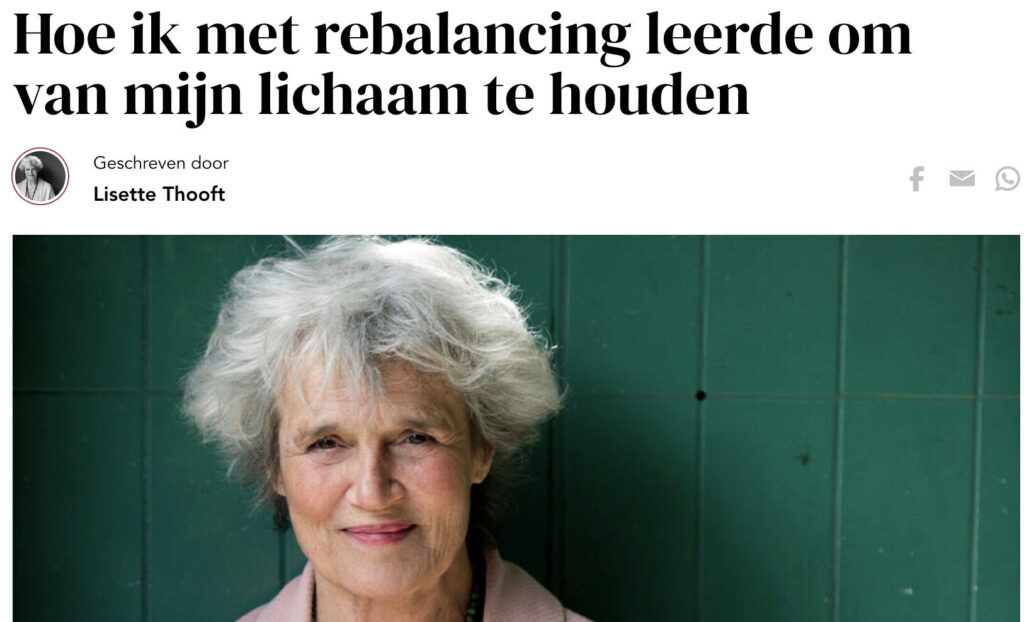
- How I learned to love my body through Rebalancing – Lisette Thooft, Psychology Magazine
Viewing recommendations
- About pain and being around it, YouTube video by co-founder of Rebalancing Netherlands Jeanine van Deursen.
- Back to your body, Lisette Thooft
Reading tip
How I learned to rebalance and love my body
Psychology Magazine article