What is schema therapy?
Schema therapy focuses on changing patterns in your thinking, feelings, and behavior that cause you a lot of distress. The therapy assumes that these patterns stem from unmet basic needs in your childhood. For example, the need for connection, safety, the ability to express yourself and receive recognition for it. But also the need for autonomy and sufficient space for play and spontaneity.
When persistent shortages have developed in such basic needs, because you grew up in an environment with a lot of conflict, violence, or little emotional connection, then patterns emerge. You can see patterns as ‘emotional wounds’ that are inflicted when needs are not structurally seen and fulfilled.
Colored glasses
A schema colors the way you view reality; towards yourself, the other person, and the world. You can think of it as a pair of glasses. You see primarily the information that your schemata seem to confirm. Or, through that tinted lens, you are inclined to interpret situations in a way that fits what you expect from your schemata.
When schedules are reactivated, it’s as if you’re hitting a gaping wound, and the pain (the fear, sadness, or anger) is often much stronger than what seems to fit the moment.
Lace in yourself
Another way to look at schedules and the patterns in your life is to see them as ‘flaws in yourself.’ As a child, you felt lonely, sad, anxious, and/or angry when you lacked basic needs. Often, there was no space for these emotions in the environment in which you grew up, and you were forced to learn how to best survive these emotions. For example, you learned to avoid situations as much as possible. Or you learned to behave more stoically. As a result, you have Protector developed within yourself.
Avoidance
Although that Protector If you have helped someone change in the past, the schedules themselves will not change. Feelings are not removed or resolved by avoidance. Emotionally speaking, you carry that child you used to be with all those schedules, so you still carry that along with you. The only way to get rid of that pain is by letting it go. Protector Letting it take over. That way you break into that old avoidance and the cycle is complete.
How did schema therapy originate?
Schematherapy was developed by Jeffrey Young in the 90s of the last century in New York. Jeffrey Young, who was originally a client-centered therapist, worked together with T. Beck, who was originally a psychoanalytic therapist. This collaboration took place at the Center for Cognitive Behavioral Therapy. Thus, schematherapy emerged as an integration of cognitive behavioral therapy (CGT), client-centered therapy, and psychodynamic therapies.
Schematherapy is also strongly influenced by attachment theories and forms of psychodrama. Schematherapy can therefore be seen as an integrative form of psychotherapy.
How does schema therapy work?
Analysis: understanding how it works for you
Schema therapy helps you, first and foremost, to learn to recognize your strengths and the gaps in your basic needs within yourself. In an extensive analysis phase of 5-10 sessions, you and the therapist work together to determine which gaps you experienced in your basic needs in your childhood, what was traumatic, and how these basic needs led to the development of the different aspects within you. You learn to distinguish these aspects and together with the therapist give them a name that suits you. At the end of this analysis phase, you receive those insights in writing, both in written form and in a more schematic model.
Therapy: the change
Early stage
After this phase comes the change phase. At the beginning of this phase, you learn to recognize more and more different aspects in everyday life. At the same time, your therapist offers you new, healthy experiences that you actually should have had in your childhood. Not only through conversations, but also through exercises. In those exercises, you are sometimes asked to imagine important events from the past and let them unfold differently. Or your therapist asks you to play out the different aspects of yourself with different chairs.
Therapists explicitly focus on trauma processing in schema therapy, for example in the form of imaginal re-writing or integrated EMDR.
- Middle phase
In the middle phase of treatment, the therapist teaches you more and more about how to take care of your underlying basic needs in a healthy way. The healthy Adult Kant and the Happy Side in your ability to be strengthened. In this way, you can become Healthy Adult learn to take more control of your own life and prevent yourself from falling into old patterns.
- Final phase
In the final phase of therapy, you actually learn to change the behavioral patterns. By learning to behave differently, old patterns become weaker and stronger new, healthy patterns can be reinforced.
For which complaints is schema therapy?
Schematherapy has been developed for the treatment of personality problems – and/or other persistent mental health conditions.
Many people who have been diagnosed with a borderline personality disorder are dealing with complex trauma. People with long-term anxiety disorders and depression can also be affected by traumatic events in the past.
Where can I undergo schema therapy?
There are now quite a few institutions that offer schema therapy as part of their care package. Ask your therapist or intake coordinator about it.
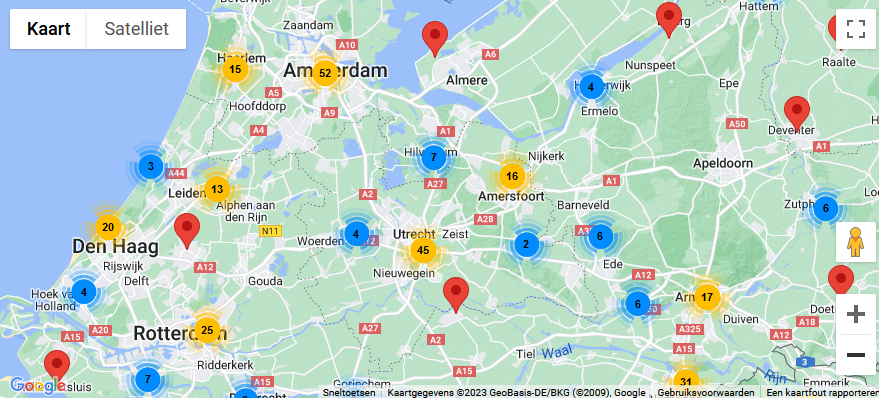
 Of Association for Schema Therapy (VSt) offers an extensive search function to find a psychotherapist in your area:
Where can I find more information about schema therapy?
At the Association for Schema Therapy (VSt)
Reading tips
- Casebook of Schema Therapy – Hornsveld, Bögels & Grandia (2021)
- Break your patterns in five steps – Van Genderen (2023)
- Gieles, J. (2021). How do I get rid of old patterns? Psychology Summer Book 2021, 32-45
- Living your life – Young & Klosko (1999)
- Breaking patterns – Van Genderen, Jacob & Seebauer (2012)
- Linda Hummel and Annemieke Driessen (2018). Trauma treatment using the schema model mode and EMDR. Behavioral therapy, 51(3), 186-206
- The Association for Schema Therapy offers a Extensive literature list and tools (for professionals)
Viewing recommendations
- Animation VSt: What is Schema Therapy?
- Pelable (female): Schema therapy, what is it? & my experience.
- Animation Childhood Trauma and the Brain | UK Trauma Council (English)
- Interview with Nadene van der Linden: Healing Trauma through Schema Therapy (English)
Audiovisual productions that show various elements, methods, and techniques within schema therapy are available for purchase at a cost. www.schematherapy.nl
Reading tip
How do I get rid of old patterns?
Psychology Magazine article

In collaboration with
Remco van der Wijngaart
Psychotherapist and healthcare psychologist, supervisor and trainer in schema therapy (VSt and ISST) and cognitive behavioral therapy (VGCt). Working in Psychotherapy practice Perspectief Maastricht and director of Van Genderen Training.