What is Trauma-Focused Mentalization-Based Treatment (TF-MBT)
Trauma-Focused MBT (abbreviated TF-MBT) was specifically developed to support people who have experienced prolonged stress and insecurity at a young age in reducing the difficulties they experience. For example, being overwhelmed by emotions or feeling closed off, and having difficulty trusting others. You learn how to better understand yourself, others, and social relationships. And also to be able to distinguish better between who is trustworthy and who is not.
TF-MBT is a variant on the original MBT. In addition to mentalizing, TF-MBT specifically focuses on the meaning of the traumatic events and the impact they have had on the present, both emotionally and physically. The TF-MBT program also incorporates body-oriented elements and focuses on lifestyle/self-care.
What is mentalizing?
Mentalizing describes the ability to think about what goes on within ourselves as well as in others. This helps us understand ourselves, our emotions, and our relationships with other people. We learn to mentally process things from childhood through our relationship with our primary caregivers.
What influence does trauma have on mentalizing?
When there is early neglect, abuse, mistreatment, or other traumatic experiences, and we don’t have the opportunity to share our experiences with a trusted other, our ability to be able to mentally process and trust may be affected. Not being able to mentally process well can result in difficulty later on in understanding or responding to your own feelings.
Feelings and emotions can be very intense and confusing, and it can feel as if they suddenly appear out of nowhere. It is also often difficult to understand other people’s inner world. This can lead to difficulty in trusting others and in building meaningful, positive relationships. This can lead to avoiding others, feeling very isolated and alone, and not having the chance to talk about your difficulties or to feel supported.
How was TF-MBT created?
MBT was developed in the 90s in England by Anthony Bateman and Peter Fonagy, specifically for people with a borderline personality disorder. MBT has its origins in psychoanalytic theory and is based on the theory of attachment and of mentalization.
Trauma-Focused MBT is an evolved form of MBT, which also specifically focuses on the consequences and meaning of traumatic events.
Dawn Bates and her team at GGZ -Breburg developed the TF-MBT program. They saw (attachment) trauma as a vulnerability factor for a range of psychological problems.
An international group involving Dawn Bates and founders of MBT Anthony Bateman and Peter Fonagy is now investigating whether TF-MBT can also be offered as a stand-alone therapy instead of as a module within the regular MBT treatment.
What does TF-MBT look like?
TF-MBT is an intensive form of therapy. The treatment is a combination of individual and group therapy. It can be conducted on an outpatient basis and part-time.
Both individual therapy and group therapy are important components. Group experience can help people become more confident in others, and it can help them feel safe enough to talk about a traumatic event.
The goal of the group is to gain insight into how this experience has affected you and your perception of yourself, others, and the world. The therapy aims to support you in increasing your confidence in relationships by understanding yourself and others better.
What symptoms or conditions can TF-MBT help with?
MBT was initially a treatment aimed at people with a borderline personality disorder. Nowadays, there are several new variants of MBT, which allow people with other problems to undergo this treatment as well, such as personality disorders, psychosis, addiction, depression, anxiety disorders, eating disorders, and trauma (complex trauma and PTSD).
TF-MBT is specifically for people with trauma who often have many different mental health problems, including anxiety and mood problems, personality issues, and PTSD.
Where can I follow TF-MBT?
An international module TF-MBT has been developed that can complement the regular MBT treatment. This is currently offered at*:
- GGz Breburg Youth offers MBT and Trauma-focused MBT treatments for adults, adolescents and their families. TF-MBT targets young people with severe personality disorders and complex trauma issues, often involving neurodiversity (ADHD, ADD, etc.).
- The Crossroads offers a number of MBT treatment programs for adults, parents with borderline personality disorder, and adolescents (adolescents) and their families.
- It NPI center for people with personality disorders offers MBT for young people and adults.
*TF-MBT is not yet included in the therapy offerings on their websites, as it was only recently added and further research is still being conducted.
Where can I find more information about TF-MBT?
On the MBT Netherlands website find comprehensive information about MBT.
Reading tips
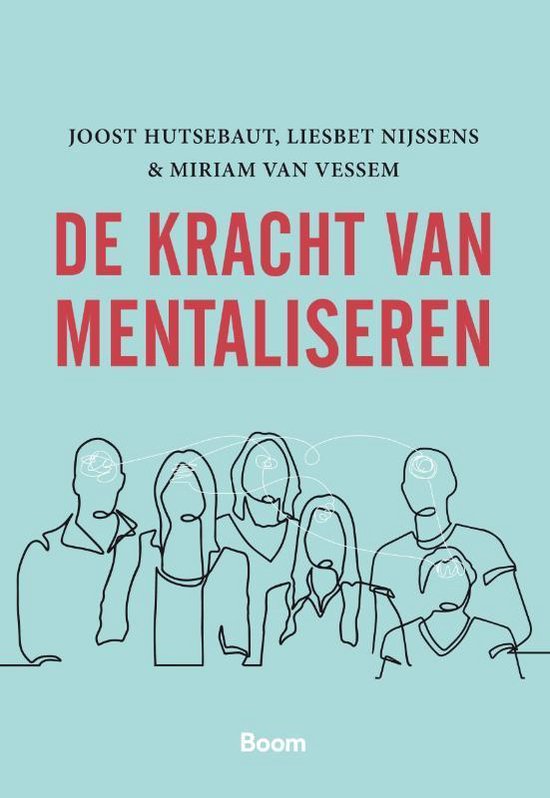
- The power of mentalizing – Joost Hutsebaut, Liesbet Nijssens, Miriam van Vessem
- Smits, M., Luyten, P. & Bales, D. (2015) Discovering ‘how the mind works’. The journey of a patient within Mentalization-Based Treatment. Journal of Psychotherapy 41(4), 253-270.
Viewing recommendations
- (Drawing) movie clip ‘What is mentalizing?’ from GGzE
- Role-playing in which Dawn Bales shows how to apply MBT
- Knowledge base with videos from MBT founders Bateman and Fonagy
Book recommendation
The power of mentalizing
Joost Hutsebaut, Liesbet Nijssens, Miriam van Vessem
Watch tip
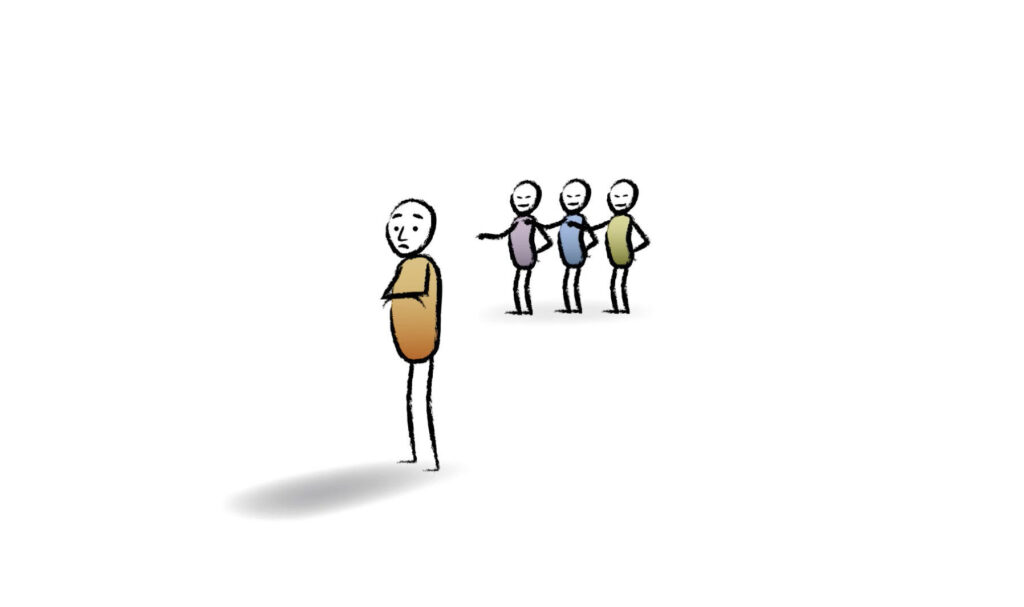
Why mentalizing can be difficult
A short animation with an explanation.
In collaboration with
Dawn Bales
Clinical psychologist-psychotherapist and founder/former director at MBT Netherlands (MBT NL). Dawn, together with Peter Bleumer, founded the foundation in 2021 MBT Expertise established. She works at GGZ-Breburg as a manager of MBT innovation, researcher, and as a clinician in trauma-focused MBT. Dawn is co-author of the MBT quality handbook and holds a Ph.D. on the implementation of MBT in the Netherlands.