Trauma: more than one meaning
The word trauma is used in various ways. At the hospital's traumatology department, for example, it refers to physical injury. In psychology and here at Traumanet, it refers to psychological and emotional injury.
Because there is no single definition of what trauma actually is or what is meant by it, the meaning can vary:
- Sometimes trauma refers to the traumatic event: ‘he has experienced trauma’
- Sometimes it refers precisely to the consequences: ‘she suffers from trauma’
- Some use the term trauma only for very severe and life-threatening events (this is also called the major trauma criteria (also known as Type 1 trauma)
- Others also use it for minor discomfort that can grow big if it piles up
And a distinction is also made between different types of trauma, such as shock trauma, war trauma, or complex trauma.
So when it comes to trauma, it can be about many different things. That sometimes makes it confusing. At Traumanet, we focus mainly on the consequences of what you have been through and how this has wounded you.
How does trauma develop?
Trauma has many different causes. Roughly speaking, you can say that it can arise from:
- Things that were present but should not have been, such as violence, war, or an accident.
- Things that should have been there but were instead lacking, such as safety, support, and predictability.
Sometimes it involves one or more major events, sometimes long-term stress or chronic deprivation. In both cases, trauma can develop, which can leave not only mental but also physical traces.
International trauma expert Gabor Maté describes it nicely:
“Trauma is not what happens to you, it is what happens inside you
as a result of what happened to you.”
Trauma is personal
What is traumatic for one person doesn't have to be for another. After all, it is not just about what happened, but much more about how you experienced it yourself:
- How threatening or overwhelming was it for you?
- What meaning did you give to it?
- Were you able to process it, or not?
Therefore, both the cause and the consequences of trauma can vary greatly. That is why trauma is always subjective and personal. Everyone experiences it differently, and the consequences and recovery process also vary from person to person. That makes trauma a broad, but above all, very personal concept.
Trauma is a normal response
Anyone in life can deal with trauma. No matter your age, origin, or background. If something happens to you that is too big or too heavy to bear, it is completely normal to suffer the consequences.
So trauma is no sign of weakness or deviation. It is a normal reaction to abnormal circumstances.
And perhaps most importantly: It is not your fault.
Reading tip
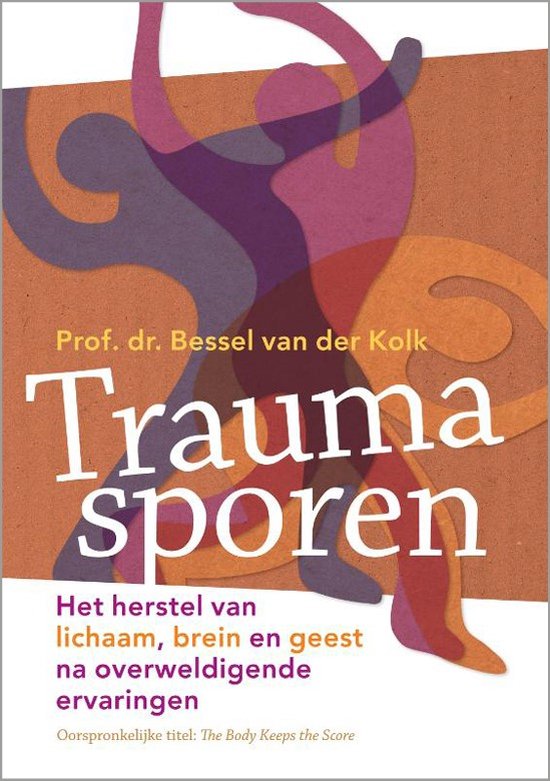
Trauma Spores - Bessel van der Kolk
The recovery of body, brain, and mind after overwhelming experiences.