A child can play, laugh and make friends, and at home they can sense a change in someone’s voice or the tension that hangs in the air. For a young child, what happens behind the front door is the ordinary world. How can they tell that something feels unsafe when it doesn’t know any other reality?
In my ongoing research into child abuse and sexual child abuse within the family or the community, I heard how much confusion can lie beneath silence. The same adult can offer comfort and cross boundaries. You are safe with me, the relationship tells you. Something is not right, the body tells you. I want to be close to you and I am afraid of you, the feelings say. Can I still trust what I feel? The child asks. The secret of the other becomes a secret that the child must carry alone. That can lead to chronic tension and deep loneliness.
To stay connected, a child may need little space or may talk a lot. At home, they may try to maintain a good atmosphere and stand out from the family by being helpful or independent. We understand better what that behavior means when we also look at how the child feels and how the people around the child interact with each other.
In recent years, I also conducted research among five hundred therapists and professionals. During the workshops, I saw their involvement and how complicated their decisions sometimes are. When a family functions well on the outside and adults express themselves easily, insecurity can remain hidden. What parents have learned to tolerate on their own, they sometimes find difficult to recognize as unsafe for their child.
A child learns what safety is when they repeatedly see that they are in control with an adult. Even when they are angry, excited, or sad, or say no. They can trust that their feelings and boundaries matter. Early warning can begin with a simple question about home. With time to let a response come in and the willingness to come back later on what the child has made clear.
What was missed in childhood can become felt again years later. In the stories about that living loss, I hear the longing for recognition and for a warm witness who helps to bear the loss less alone. I wrote this poem about that silent closeness.
Silent comfort
It sometimes seems like
or we have become lost
to go in with empty hands
but with a
with a warm heart
Together with a
Listening ear
speechless
besides someone
can be seated
To be silent
to let it come
What wants to happen
unfold
Because it is precisely the
warm silent comfort
and make them feel
that you are there,
gives support
and trust
At the beginning of the Week against Child Abuse I am thinking of children who are still searching for words to describe the disruption, disruption and lack they experience at home. They need careful understanding. Together we can form a protective circle around them. Sometimes this starts with one adult who listens to a child with loving eyes, with the ears of the heart.
What we learn earlier can also be protected earlier.
José Al, psychotrauma specialist, researcher, expert in experience and author of The soiled nest en One hundred votes.
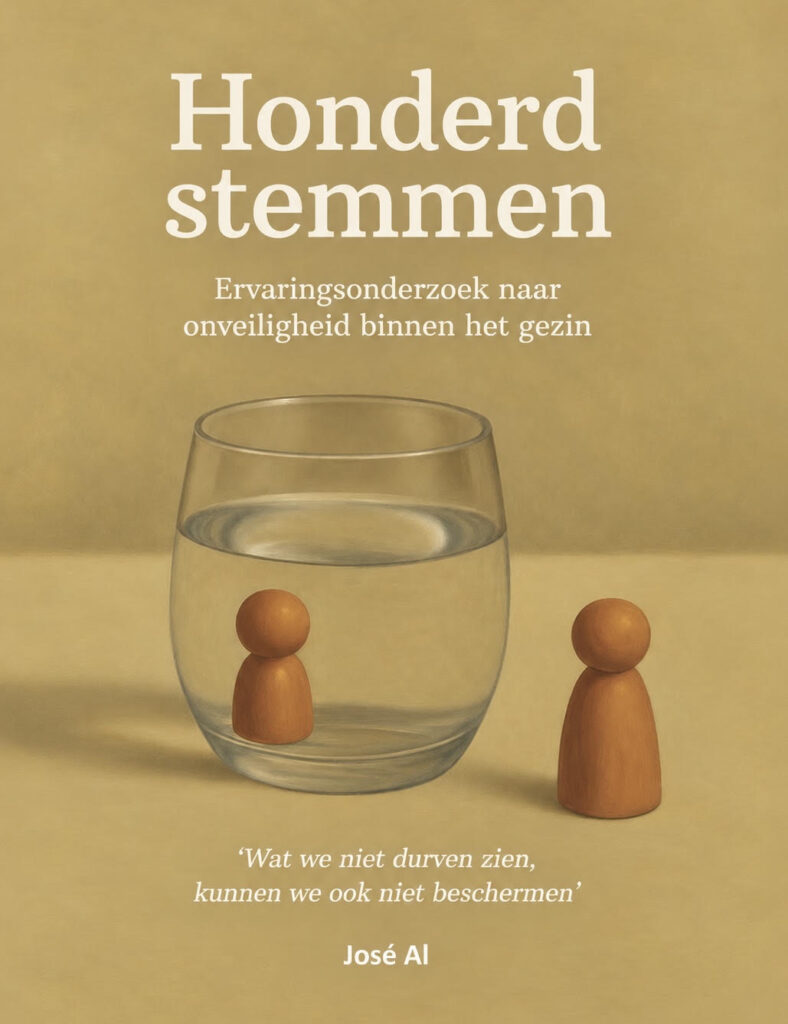
One Hundred Voices appears during the Week Against Child Abuse. In this new book, José gives space to one hundred adults who grew up in an unsafe environment within their own family and family system.
With this book, she contributes to early detection and prevention by sharing what is helpful, clarifying, and healing from her research work. At the same time, the book offers recognition and recognition to people with personal experience.