What is Sensorimotor Psychotherapy?
The body and bodily experiences form the starting point for SP. The body provides information about what has happened to a person, provides points of reference for developing resources, and is the gateway for processing traumatic and attachment experiences.
The idea behind it is that elements from an unprocessed trauma in the body These physical reactions to trauma must still be resolved in order to be processed properly. SP therapists assume that every human being possesses a healing ability and internal wisdom.
How did Sensorimotor Psychotherapy originate?
Sensorimotor Psychotherapy (SP) was developed in 1980 by Dr. Pat Ogden. She built on the work of Ron Kurtz and his Hakomi method (1970) and the work of Ida Rolf for structural integration (Rolf, 1971). Ogden mainly draws on insights from attachment theory, affective neurobiology, and dissociation.
SP is also based on the theory of the French psychiatrist Pierre Janet, who called the cessation of bodily reactions after trauma an ‘acte de triomphe’ (1933).
How does Sensorimotor Psychotherapy work?
In a session, you and the therapist start with the experience you bring. Through mindfulness, you explore how this specific experience feels in the body.
As soon as physical activity is visible in the here and now (for example, raising your shoulders, moving backward, tension in your jaw), the therapist brings the attention to that activity and asks for permission to work with it.
Processing
In this way, you come into contact with the trauma and your reactions to it, which are palpable and visible in your body. Work is done on emotion and cognition from the body. Now comes the phase of processing, letting the body release what it has stored – the movement that was once held back. That can also be trembling, letting go of tension.
Everything takes place in the here and now. The therapist assesses the situation and looks for any physical action that is needed on their part, for example giving pressure or offering you a hand to take.Â
Rounding off
After this phase of experiencing and completing, the integration follows. You tell them how you feel and whether anything has changed. Finally, you are given homework in the form of a movement or a sentence that you can repeat every day.
What symptoms is Sensorimotor Psychotherapy for?
Sensorimotor psychotherapy is suitable if you suffer from the effects of trauma, attachment problems, and complex relational trauma.
- Bee trauma symptoms The intention is to process the trauma.
- In the case of developmental and attachment problems, SP aims to bring up the missed experiences at the physical level once again, to experience what did not happen then, in the here and now, in contact with the therapist.
- Bee complex relational trauma In addition to the body, work is also being done on your inner world and the various parts of your trauma.
For which age is Sensorimotor Psychotherapy suitable?
Sensorimotor Psychotherapy is also suitable for children and adolescents. This involves using play materials, such as drawing, games, sensory materials, scent boxes, balls, and bubble blowers. The focus is on the body’s reaction in the here and now.Â
Where can I take sensory-motor psychotherapy?
In the Netherlands, over 350 therapists have been trained in trauma treatment according to SP. 130 of them have also completed the Level II training in developmental trauma. In 2023, there are 43 certified advanced SP therapists.
All SP therapists are GZ psychologists, clinical (neuro) psychologists, psychiatrists, psychotherapists, generalist orthopedic specialists, senior post-master’s psychomotor specialists, and post-master’s dance therapy specialists.
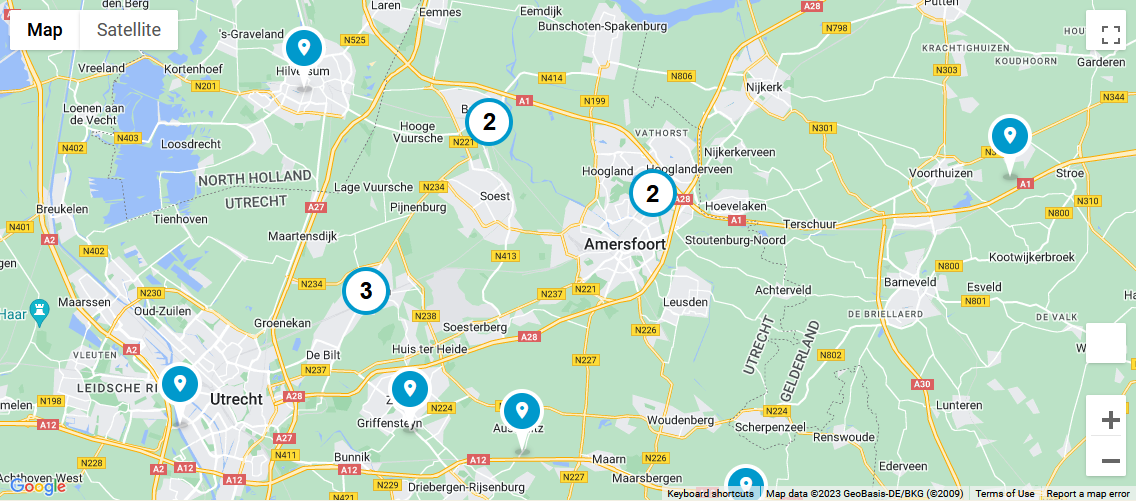
Search for Sensorimotorpsychotherapy to a SP therapist in the area.
Where can I find more information about Sensorimotor Psychotherapy?
Reading tips
- Sensorimotor therapist Anneke Vinke: ‘Ggz therapists, think of the body’ in GZ-Psychology (Dec 2020)
- Trauma and the body – Pat Ogden, Kekuni Minton & Claire Pain
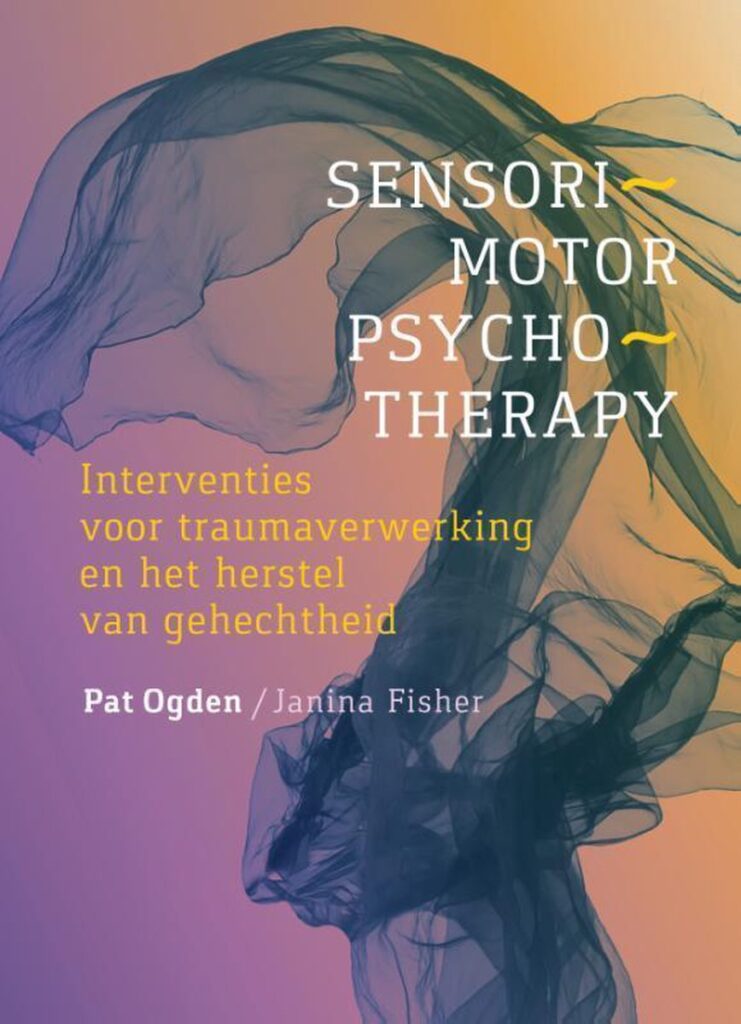
- Sensorimotor psychotherapy – Pat Ogden & Janina Fisher
- Transforming the living legacy of trauma – Janina Fisher
- Overcoming inner self-alienation after trauma – Janina Fisher
Viewing recommendations
- Tracking the Body to Heal from Trauma - Pat Ogden, PhD
- Interview with Pat Ogden About Sensorimotor Psychotherapy
- SP Trauma Training (Level I) Testimonials
Watch tip
Interview with Pat Ogden about Sensorimotor Psychotherapy
Reading tip
Sensorimotor Psychotherapy – Pat Ogden
Interventions for trauma processing and the recovery of attachment
In collaboration with
Anneke Vinke
Coordinator of SP programs in the Netherlands, certified advanced SP therapist, GZ psychologist, and orthopedic specialist. Anneke has a PhD and specializes in the diagnosis and treatment of trauma and attachment issues, particularly in adopted or foster care children. Her practice is called Adoption practice.