In this article, Saskia Ebus takes you on a journey into a relatively unknown but important topic: the possible influence of the pre- and perinatal period on later life. Drawing on her background as a neurologist, body-oriented trauma therapist, and experienced expert, she shows how traumatic experiences during pregnancy and around birth can persist in the stress system and have a long-term impact on physical and mental health.
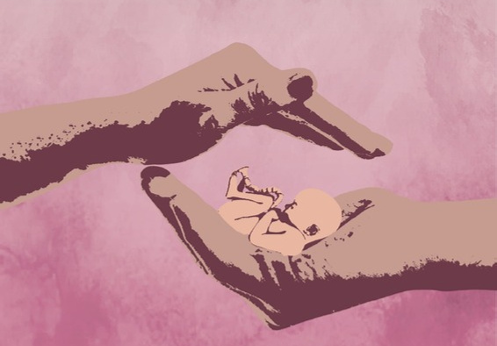
I can already hear you thinking: does a field of study really exist called ‘pre- and perinatal psychology’? What does it cover? When I tell you that it also deals with traumas that fetuses and babies can suffer, which in some way can carry memories into adulthood, I understand that you raise your eyebrows.
Before 2015, I had never heard of such early traumas myself. As the sober, scientifically-minded neurologist I was at the time, I would have thought: how could experiences of fetuses and babies impact our later psychological and physical well-being? And how could we even remember any of that? So, could the brain still form conscious memories so early? Perhaps something else was at play: “Oh no, if this is really true, what does that mean for me, for others, for caring for pregnant women and for babies?”
The former medical practice
When I was training to be a neurologist, I had to regularly remove the excess fluid (liquor) from the spinal cord of a small baby using a needle in the pediatric neurosurgery department. Without anesthesia. Without much attention to the baby at the time, but mainly with attention to myself: ‘What an uncomfortable thing to do; I’ll do it well, right? Hopefully an experienced nurse will come to help me; I feel alone and uncomfortable with it.’.
The parents were never there to comfort this child. It didn’t even occur to me to make sure that someone was there for that child. And I had absolutely no concern for what this could mean for this little one in later life: this daily pain without explanation, without support, and without friendly interaction. I would have thought: fortunately, she will forget all of this later.
This happened at the beginning of this century. In the previous century, newborns were even operated on without anesthesia until the 1970s and early 1980s (only with sedation—that was more medically safe)—because they would hardly experience pain with an underdeveloped nervous system and would not remember anything later on anyway.
A turning point in perspective
Now, after my training in England and after going through a crisis myself that had its origins in a very difficult pre- and perinatal period—of which I also began to experience relapses—I think about it very differently.
I now know that for decades there have been psychologists who have been interested in the impact of the period in the womb, during birth, and in early infancy on our bodies, our stress system, and our behavior. Important pioneers in this field were active in the United States in the 1980s (such as William Emerson, a clinical psychologist) and in Germany (Ludwig Janus, a psychoanalyst).
The impact of early stress
It has now been shown that severe stress has serious consequences for the development of our central nervous system and our stress system very early in life. For example, it was found that the amount of stress symptoms (such as anxiety) in babies born after their mother experienced stress during pregnancy PTSD The symptoms of anxiety experienced by the mother after the Twin Towers attack were clearly related to the mother's stress hormone profile (the amount of cortisol) during pregnancy*.
Another example of early severe stress is the period of premature birth of babies, which is associated with various physical and psychological consequences in later life and for which scientific support now exists. Fortunately, much preventive work is being done today for premature and/or sick babies to support them. A great podcast about this is that of experienced speaker Ingeborg Anna Martens and neonatologist Nikk Conneman (‘Very premature, how is it now?’).
Pre- and perinatal re-experiences
Another area where pre- and perinatal psychology deals with is understandably more resistant: that of pre- and perinatal reenactments. Think for example of reenactments of birth, when it has been traumatic due to prolonged oxygen deprivation, severe pressure or pain. This kind of experience does not usually come to the fore during therapy that focuses solely on talking without attention to the body. Therapists who work with the body see this more often.
Re-experiencing can occur when our consciousness expands—for example during meditation, body-oriented therapy (with or without touch), the use of psychedelics, and, as I suspect (and have experienced myself), also during (borderline) psychotic episodes. How exactly these processes work, and how memory and consciousness can generate such experiences, is not yet fully understood and requires further scientific research.
The theory of Stanislav Grof
The psychiatrist Stanislav Grof (1931–) observed many clients during expanded states of consciousness, for example after taking LSD or during breathing exercises (a technique involving deep in-and-out breaths without pause). Based on his observations, he developed a kind of classification for pre- and perinatal re-experiences: the Birth Perinatal Matrices.
These classifications include: the safe (or unsafe) uterine cavity (BPM I); the intense pressure in the birth canal before the cervix opens (BPM II); the ‘liberation’ and passage after the cervix opens (BPM III); and the first moments after birth (BPM IV).
These matrices are connected to archetypal patterns that reflect deep emotions and bodily sensations from the pre- and perinatal period, with themes such as safety, fear, terror, or, conversely, euphoria. According to Grof, disorganizing experiences later in life often coincide with similar experiences from the pre- and perinatal period.
Thus, the loss of a partner in adulthood can be particularly devastating when someone unknowingly carries a ‘reminder’ of an early separation from the mother following a difficult birth. The stress and despair experienced at the time can then be reactivated in the adult’s body by this loss.
Disorganization and personal experiences
Personally, I became quite disoriented when, during my meditations—which I approached in a body-oriented way, in keeping with my training in body-oriented psychotherapy—I experienced flashbacks that I could not place at that moment. I experienced spasms and twitches in my body, intense emotions and images, nightmares (with symbolic images and physical experiences of enormous destructive pressure on my body or of burning), and a constant, increasing anxiety. Above this, there was a prolonged depressive episode.
In retrospect, I think this started as a ‘Delayed PTSD, These images, related to a traumatic birth experience, showed similarities with the descriptions of Stanislav Grof. .
Attention to the pre- and perinatal period
What I wish now, ten years after this disruption, is that healthcare providers will ask more often about the circumstances in the pre- and perinatal period—especially when someone exhibits characteristics of traumatic stress but the trauma is not clearly traceable.
For example, ask about the stress the mother experienced during pregnancy, whether there was any premature birth, how the birth went, and whether there was direct skin-to-skin contact with the parents (especially the mother). Also ask about the home situation and the parents' psychological resilience during the period when safe attachment was supposed to develop.
Questions like these fit within a broader development that is already underway: healthcare providers are focusing less and less exclusively on classifications of mental health disorders and associated treatment protocols, and increasingly on the question: what have you experienced and how did you become who you are now? Why do you become disoriented at a later age, when you used to be able to cope with it?
A coherent story about how it all came about is of great value. It brings understanding and compassion—both to the person seeking help and to the helper—and provides direction for recovery.
Working with trauma from the pre- and perinatal period
There are various methods for working with trauma from the pre- and perinatal period. You can find them both outside of regular care and within it. For babies and children, within regular care, for example, there is the EMDR storytelling method, And for adults there is specialized mental health care: EMDR for pre- and perinatal trauma in children. Psychotherapy Intensive Malden (PIM).
I am writing this blog with a mission: hopefully it will contribute to greater awareness of the impact of our pre- and perinatal period. And hopefully it will inspire more scientific research, which can lead to better treatments and more prevention.
A book with the experiences of both laypeople and professionals about pre- and perinatal trauma will be published soon, of which I am a co-author: Vulnerable start (Samsara publishing house). On November 11, 2026, this book will be presented during the symposium ‘Pre- and perinatal trauma – from imprint to impact’. Registration can be done via the website terugnaarhetmidden.nl.
I hope to welcome many interested people there!
Saskia Ebus (1972) studied medicine and worked as a neurologist until 2021. In 2015 she started the Core Process psychotherapy training in the United Kingdom: a mindfulness-based body-oriented therapy with long-term and intensive relational contact. She has had her own therapy practice since 2017. She is also Somatic Experiencing She is a practitioner and follows the Integrative Pre- and Perinatal Trauma Therapy training at Birthimprints. She is an expert in the field of chronic mood and anxiety sensitivity resulting from pre- and perinatal trauma and attachment trauma. She leads an online Qigong group (‘GHIA-Qigong Group’) together with Ronald de Caluwé for people with sensitive nervous systems and a close relationship with their body. window of tolerance as a result of (early) trauma.
* Source of scientific article
Brand, S. R., Engel, S. M., Canfield, R. L., & Yehuda, R. (2006). The effect of maternal PTSD following in utero trauma exposure on behavior and temperament in the 9-month-old infant. Annals of the New York Academy of Sciences, 1071, 454–458.