What causes PTSD?
Post-traumatic stress disorder can develop after a single event, such as an accident or violent incident, and in response to multiple and repeated traumatic experiences, such as sexual abuse, war, or domestic violence.
You may have experienced the traumatic event yourself, but witnessing something happen to someone else, or finding out about a traumatic event that happened to a loved one, can also lead to PTSD. Witnessing can mean actually seeing something happen, in real life or via television, for example. But even when you don't see something, but do hear it happen, this can have a major impact.
You can also develop this disorder when you are frequently exposed in your work to intense events or stories about them that others tell you. This is also known as ‘occupational PTSD’ and occurs, among others, in emergency workers, police officers, and defense personnel.
PTSD with delayed expression
Post-traumatic stress disorder can occur directly after a traumatic event develop, but it can also develop after a longer period of time. Sometimes even years or decades later. This is also called ‘PTSD with delayed expression’ mentioned. Situations later in life can revive memories of earlier trauma, after which you can still develop post-traumatic stress disorder.
Traumatic events
What is traumatic for someone is very personal. Not all impactful events (or experiences) are also traumatic. On the other hand, all traumatic events are often very impactful. What is certain is that traumatic events are very diverse and can involve many different situations.
Unlike a painful or impactful experience where stress symptoms subside over time, processing a traumatic event is very difficult. Memories continue to intrude in various ways, and the symptoms do not decrease and sometimes even increase.
An important characteristic of post-traumatic stress disorder is therefore that the anxiety and stress symptoms that arose during and after the event (‘post-trauma’) do not subside within a few weeks, but remain present for a long time and have a major impact on daily life.
Webinar
PTSD and partner relationships - When love is under pressure
A conversation with Aerjen Tamminga

PTSD symptoms
If you have post-traumatic stress disorder, you experience various symptoms associated with the traumatic event, such as flashbacks and nightmares. You also often experience anxiety and tension symptoms, you can be very easily startled and hyper-alert to signals from your environment.
In addition, avoiding situations and things that are reminiscent of the event and evoke a lot of anxiety often plays a major role. This can include avoiding specific locations, activities, types of people, smells, and sounds. You may be very aware of this avoidance, and of what exactly you are avoiding, but sometimes not at all.
Good to know: there is a lot of variation in symptoms between people with post-traumatic stress disorder. Just as this is also the case for people with depression, for example, psychosis or eating disorder. You may recognize a lot in others who also have post-traumatic stress disorder, but there can also be major differences. No two people are the same.
Complex PTSD
If you experience many symptoms after repeated and prolonged traumatic experiences that already began in childhoodcomplex trauma), this is also referred to as complex post-traumatic stress disorder. What is ‘complex’ about this is the impact and effect of all these experiences. In addition to ‘classic’ PTSD symptoms, with complex PTSD you also have problems with emotions, self-image, self-confidence, trust in others, and dissociation.
More about complex PTSD
PTSD is almost always accompanied by other symptoms
Post-traumatic stress disorder rarely comes alone. About 90% of people who seek help in mental health care and are diagnosed with PTSD also have one or more other classifications, including anxiety, depression, psychosis, eating disorders, addiction, and personality issues.
Although it sometimes seems as if they are two or more different conditions, these conditions often have a lot to do with each other. It is therefore important not to view or treat different conditions as separate problems, but to investigate the connection and focus on how the symptoms originally arose.
You might even wonder whether these are different disorders at all, or whether the entire set of symptoms is primarily a consequence of trauma. Much of what we call mental disorders are ultimately understandable reactions to life experiences that were too much, too big, too fast, or conversely, insufficiently present.
The most important questions are therefore not: what is wrong with you? And which DSM classification fits that?
But: what happened to you? And what do you need?
Reading tip
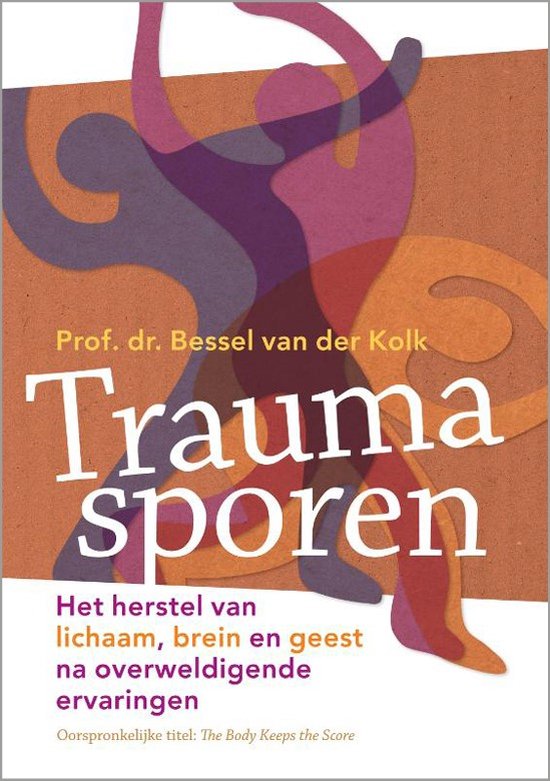
Trauma Spores - Bessel van der Kolk
The recovery of body, brain, and mind after overwhelming experiences
More about PTSD