What is Internal Family Systems (IFS)
Internal Family Systems (IFS) assumes that everyone has multiple parts (personalities). These parts are there to help you and have positive traits and qualities.
In addition, everyone has a ‘Self.’ The ‘Self’ can never be damaged, is always there, and possesses a self-healing capacity. The ‘Self’ is always present in everyone, just like the sun behind the clouds. All the parts together and the ‘Self’ form the unique and authentic ‘You.’.
Balingen
When a lot has happened in your youth, the parts change. Some parts are tucked away deeply so they no longer want to be seen. They are called exiles. These parts have attachment injuries and traumatic experiences Experienced.
Protectors
Other parts become the protectors of these parts. These protectors are working very hard to prevent you from ever being hurt like that again. They also do their best to distract from the emotions that arise when you do once triggered becomes. These protectors can feel and behave quite extremely or believe negative things. Often the parts don't even know that each other exist. They also do not know that circumstances are different now and can also unknowingly counteract each other.
Restore trust
With IFS, you reconnect with all your parts from your ‘Self’. You work on restoring the connection and regaining trust in your ‘Self’. Should your ‘Self’ still be deeply hidden behind many protectors, you first need the ‘Self’ of the therapist to connect with your parts. Until your parts trust enough to start doing it again from your own ‘Self’.
How was IFS founded?
IFS was developed by Richard C. Schwartz, an American psychotherapist. In the 1980s, he worked with family systems and noticed that clients experienced inner division. He developed the IFS model based on psychodynamic and systemic therapy. He also utilizes inner resources and compassion.
How does IFS work?
At IFS you work with your parts. Always first with those parts that have protected you. In doing so, it is very important that all parts are welcome. Also the parts that protect you in a way that is not always pleasant or helpful anymore. They helped you survive when your ‘Self’ could not yet do so. Because you were simply still too small, it was too much, and there was no one there to help you then.
Consent
An important rule in IFS is that you never bypass protectors without permission. Because if someone tries to break through that wall of defense of your protectors, the protectors often only become stronger or new protectors join in.
As soon as the protective parts understand that you no longer need that protection, and they trust your ‘Self’ sufficiently, they can soften little by little.
Healing
You can only access the trauma parts, or engage in dialogue with the protective parts, when the ‘Self’ is present. Being able to see and feel from the ‘Self’ what once was can lead to healing.
What complaints can IFS help with?
IFS can be used for anyone who is stuck in patterns, but also in the treatment of trauma-related symptoms such as anxiety, depression, PTSD, addiction problems or dissociative disorders.
IFS calls everything that we commonly label as a disorder nothing more than a cluster of protectors.
Where can I follow IFS?
Should you wish to work on processing (complex) trauma via IFS, look for someone who not only knows how this approach works, but also has knowledge of and experience in working with people with trauma.
On the IFS Platform Netherlands Can you find an IFS practitioner?.
Or search the global directory of IFS therapists to a suitable therapist nearby.
Where can I find more information about IFS?
Reading tips
- Internal Family Systems: an in-depth report from Oxford
- Parts of Us: An Interview with Richard Schwartz, Founder of Internal Family Systems. Made in the Netherlands, 16/7/2022.
- Internal Family Systems – On trauma, inner dialogues, and IFS, blog by expert by experience Anne van Winkelhof.
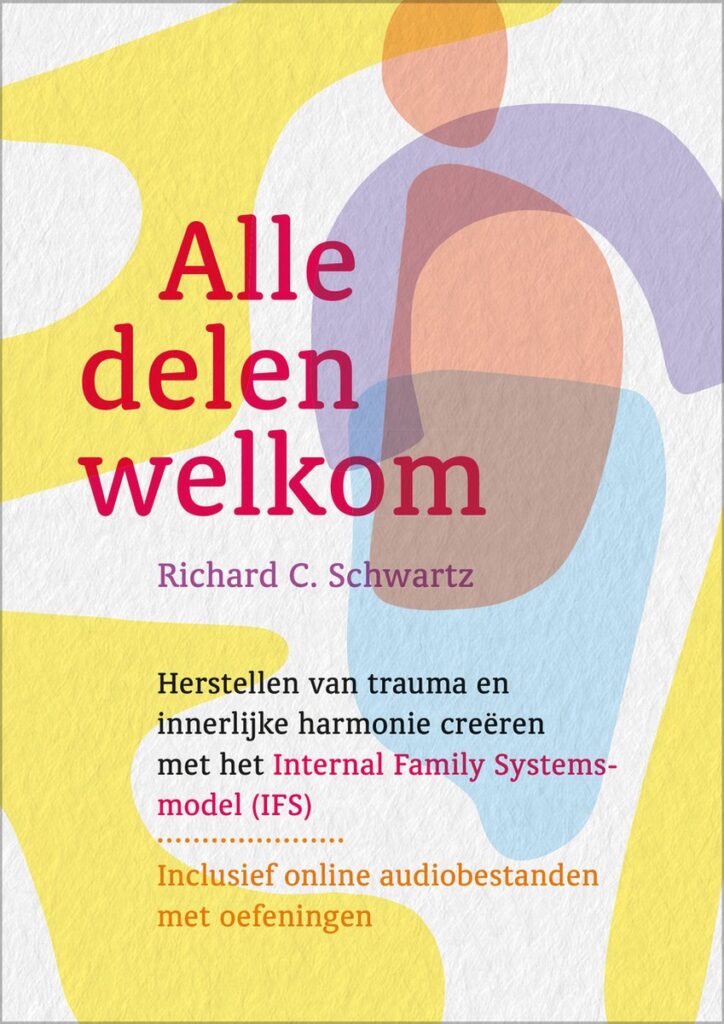
- All parts welcome, Richard C. Schwartz.
- There is still so much to be gained, Annechien Scholte-van der Veen.
- Internal Family Systems therapy (IFS), Frank G. Anderson, Martha Sweezy and Richard C. Schwartz.
- It gets better, Griet on the Beeck
Viewing recommendations
Book recommendation
All Parts Welcome – Richard Schwartz
Healing trauma and creating inner harmony with the IFS model
More about IFS
IFS Platform Netherlands
Explanation and articles about IFS and a place to find IFS practitioners.
In collaboration with
Annechien Scholte
Coach, trainer and expert by experience in the field of Internal Family Systems in a trauma-sensitive manner. Annechien has her own coaching practice Welcome coaching.