What is a dissociative disorder?
A dissociative disorder is a mental health condition of which dissociation is the primary characteristic.
Dissociation occurs to both a strong and mild degree, and everything in between. Experiencing dissociation in itself does not necessarily have to be a problem, but if you suffer from dissociation frequently and to a severe degree, it may indicate a dissociative disorder.
If you have a dissociative disorder, you may experience, among other things:
- Memory problems: being unable to remember events and/or experiences.
- Experiencing the environment as strange or unreal.
- Experiencing yourself and your body as strange, unreal, or un বলছি [Wait: unreal].
- Physical symptoms, such as paralysis, numbness or strange bodily sensations.
- Experiencing little to no connection with your body, feeling no pain or fatigue.
- Experiencing different sides or parts within yourself.
- Experiencing doubt or confusion about who you are.
Causes of a dissociative disorder
A dissociative disorder often develops as a reaction to prolonged exposure to very distressing and traumatic experiences in childhood. If you cannot escape stress and overwhelm, and you have not learned sufficiently how to regulate your emotions, both on your own and in relation to someone else, then leaving or ‘detaching’ from yourself and your environment is a particularly functional defense mechanism.
If as a child you frequently and unconsciously had to dissociate, the pattern of dissociation may have become so ingrained that a dissociative disorder developed. Although this can lead to many problems in daily life in the long run, it is important to also acknowledge the protective function that dissociation used to have, and perhaps still does.
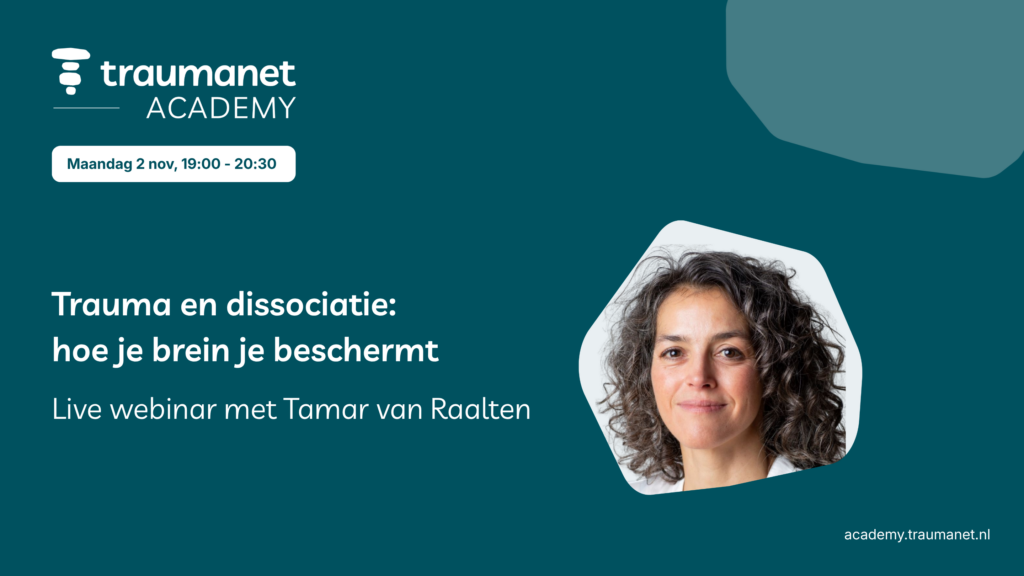
Webinar: 2 november 2026, 19:00 uur
Trauma en dissociatie: hoe je brein je beschermt
In conversation with Tamar van Raalten

Recognizing or acknowledging a dissociative disorder is often difficult
For various reasons, it can be difficult to recognize and acknowledge a dissociative disorder, both for yourself and for those around you. For example, it can be hard to explain what you are exactly experiencing or what you are struggling with. It may also be that you are so used to how you experience yourself and the world that you do not notice that it is different from usual.
Another reason why it usually takes a long time for a dissociative disorder to be recognized is that there are usually all kinds of other psychological symptoms as well. As a result, the dissociative disorder is sometimes less noticeable and is not always recognized or acknowledged.
Sometimes it is also difficult to acknowledge for yourself what symptoms you have and what that might indicate, because in doing so you also take a step toward acknowledging what you have been through, and that is sometimes still very overwhelming and hard to comprehend.
Finally, shame also often plays a role; the dissociative symptoms can make you feel like you are ‘crazy,’ and you may be afraid of others' judgment or the consequences it could have if you talk about your symptoms. It is important to know that you are not alone, and not crazy.
Various dissociative disorders
The DSM-5 describes five different dissociative disorders. There is a lot of overlap between these conditions, but there are also a number of characteristic differences. These differences mainly have to do with the type or form of dissociation that someone suffers from the most.
DSM-5 distinguishes five types of dissociative disorders:
- Dissociative amnesia: People frequently cannot remember certain events, experiences, or periods of their lives. This often happens after experiencing very traumatic events.
- Dissociative Identity Disorder (DID): The identity or personality is divided into two or more distinct parts, which manifests itself in very different thoughts, emotions, perceptions, and different behavior.
- Depersonalization-Derealization Disorder (DP/DR)people regularly experience themselves and/or the world around them as strange, unreal, or unauthentic.
- Other specified dissociative disorder (OSDD): Other Specified Dissociative Disorder.
- Unspecified dissociative disorder (UDD): like OSDD, a residual category where dissociative symptoms are present, but do not meet the criteria for any other specific dissociative disorder. In the case of unspecified dissociative disorder, the reason why it does not fit another classification is unclear or is not specifically described.
More information about the various dissociative disorders and matching DSM criteria can be found on caleidoscoop.nl.
Diagnosis of a dissociative disorder
To determine if, and if so, which dissociative disorder you have, it is important to be evaluated by a specialized healthcare professional. Severe trauma can lead to various psychological symptoms and/or conditions, not just a dissociative disorder.
It is therefore important that a care provider has knowledge of trauma and dissociative symptoms, but can also consider whether your symptoms might (also) be related to something else.
Not one person is the same
What applies to every mental disorder also applies to a dissociative disorder: no two people are the same. You may experience many similarities with someone who has the same type of dissociative disorder, but there can also be major differences. In addition, a DSM classification tells you nothing about the cause of the symptoms, but merely describes the characteristics.
More important than the DSM classification are the answers to the following questions:
- How does dissociation work for you?
- What function does (or has) dissociation serve(d) for you?
- Which words for what you are experiencing feel right to you?
- What do you struggle with in daily life?
- What helps you? What is helpful?
- What would you like help with?
It can be helpful to think about these questions and write down the answers for yourself, and/or share them with someone. When you have more insight into how dissociation works for you, you can also begin to experience more control and discover what helps you cope with it.
More about dissociative disorders
On the website of Kaleidoscope you can find a lot more information about dissociative disorders. Caleidoscoop is the association for people with a dissociative disorder.
The online community Trauma and Dissociation provides a peer support environment. Relatives and caregivers are also welcome here.
The engaging project I know nothing about it Poet and theater maker Judith Bruynzeels teaches you more about what a dissociative disorder is in an experiential way.
Reading tip
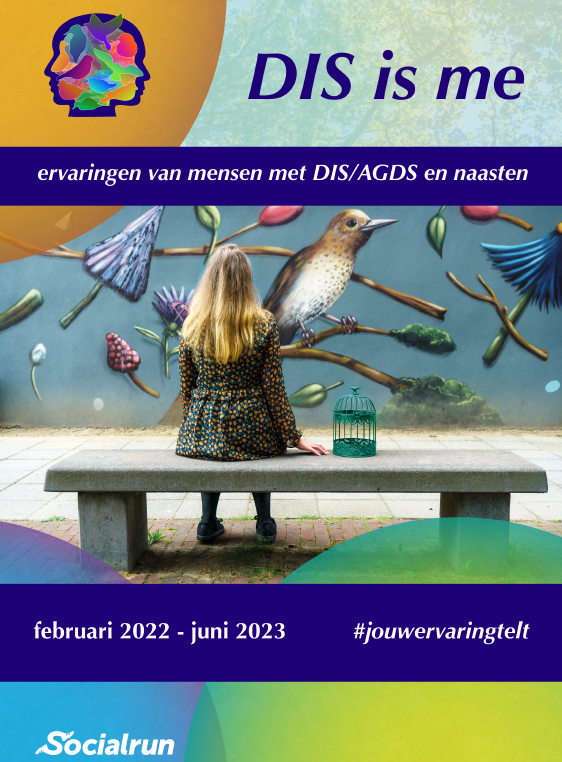
Experiences of people with DID/OSDD and loved ones