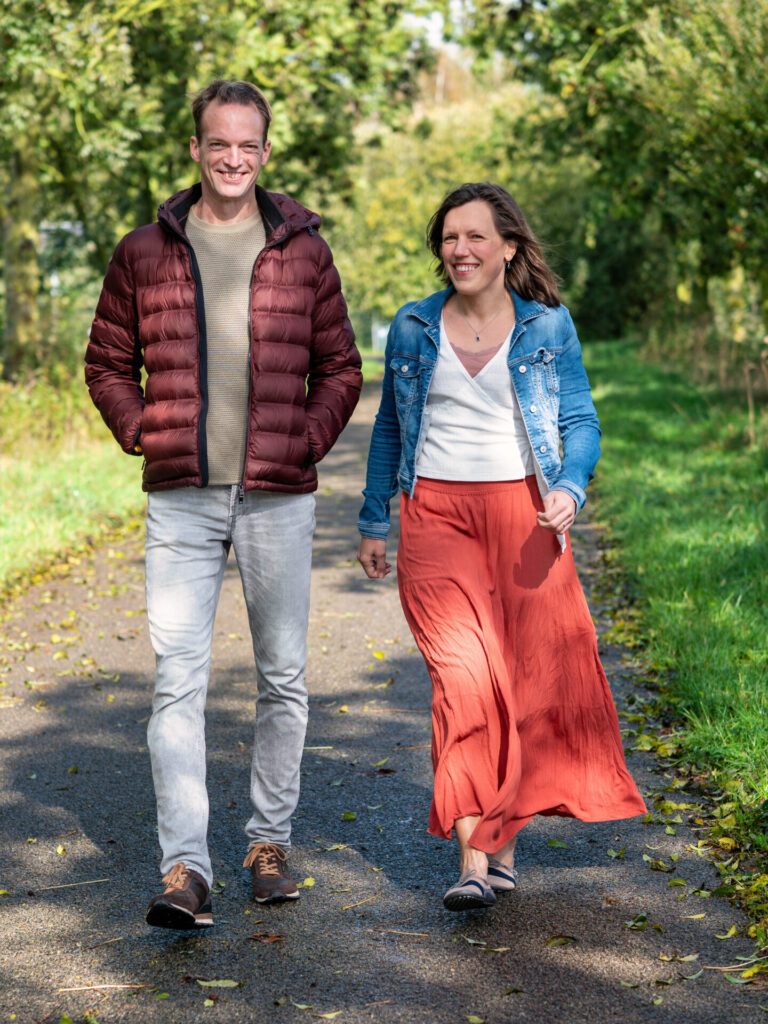
What is your experience with trauma?
Nathan: ‘Unfortunately, everything has been overwhelming in our lives in recent years. As a child, I was abused. I kept that a secret for years, also to maintain a status quo of normality with my family. I kept the lid on the situation because I felt something: if that lid is lifted, then you just have to deal with it.
‘Thanks to the BOOS documentary that exposed sexually inappropriate behavior within the TV show The Voice of Holland, I broke the cycle of re-experiencing the abuse. I sought help from my GP at the time and immediately started telling people about the abuse in my surroundings that same day. I started therapy and within a year I also confronted my brothers and parents. I started a blog online and I appeared on television with my story.’
It sounds as if this process has taken place relatively quickly.
Evelien: ‘Yes, it all happened very quickly. I could barely keep up with Nathan. Before we got married, he told me that he had been abused as a child. But he really didn’t want to talk about it. It wasn’t allowed to exist. I taught myself to keep quiet about it. And then Nathan suddenly turned completely around. He started telling everyone about the abuse and also shared it online. In a desire for some kind of recognition that he was finally starting to get, I found him turning to the other side.
‘But I wasn’t there yet. And by now Nathan’s story, through our marriage and family, had also become my story. Now you really have to stop for a moment, I said to him. We often had words about that. Whenever I said something, Nathan couldn’t hear it. What often happened, especially in the early days when he was processing a lot, was that he dissociated when I said something that was wrong. Then Nathan reacted very angrily, absent-mindedly and dismissively. We didn’t talk for days on end. In that way, I was quite powerless. Our marriage really hung by a thread.’
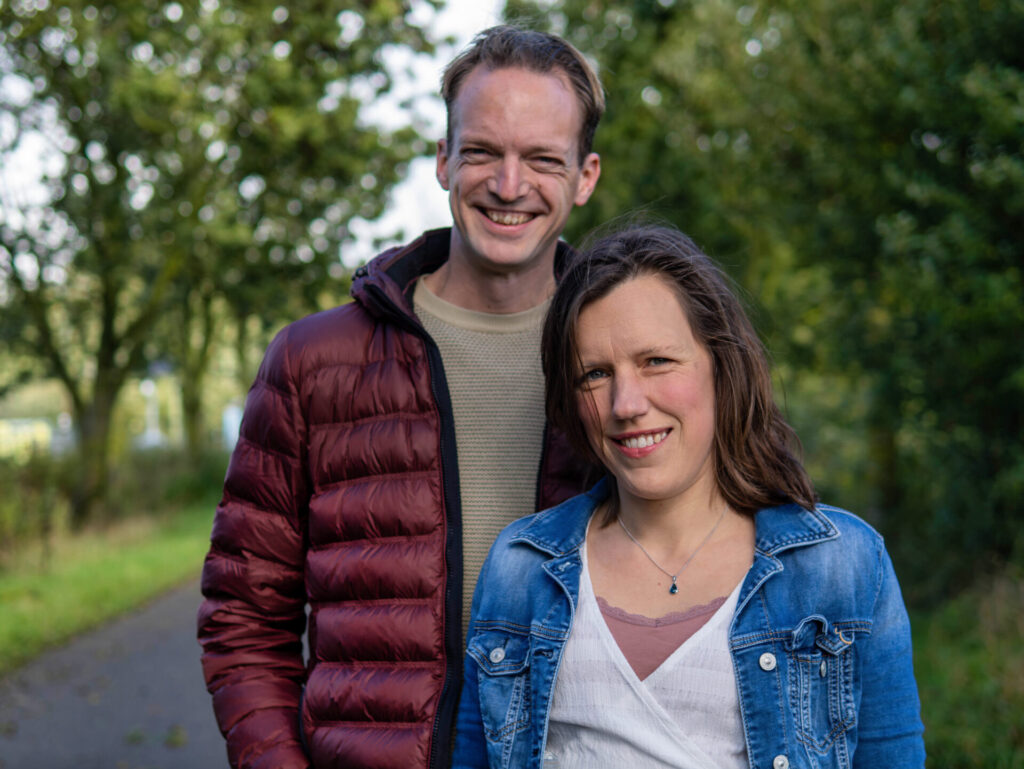
How did you get through that?
Nathan: ‘Step by step. I have to move my piece forward and that takes time and effort. Literally blood, sweat and tears. I took the whole family into my trauma pain. If I get caught up in that and dissociate, I can talk to everyone under the table. Then I can manipulate, reject or give silent treatment.
‘During the first ten years of our marriage, before I experienced reliving events, this also happened. For Evelien and me, these were my episodes of dissociation. We knew a lot about what dissociation was. In the year I started processing my trauma, the dissociation worsened. I find that extremely sad. For myself, for Evelien and for the children. Following therapy now helps enormously and ensures that I reflect on my behavior and can adjust it accordingly.’
How was this for you as Evelien’s close friend?
Evelien: ‘Extremely difficult. I found the role as partner a very lonely one. Nathan’s trauma is clear. It has a concrete cause. I stood by him and went through it in the meantime. It was so intangible. At first I kept saying: it’s his trauma, not my problem. I did want to seek help, but also thought: what is my help request? I don’t have a trauma.
‘Finding support from people who understood my role as a partner was a big challenge. I could hardly find those people. It wasn’t until a year later that I found a partner’s day for women whose husband was abused. What a sense of recognition! We all had the same questions and dynamics. Many of the women had given up in their daily lives or had changed jobs because it was too much for them. I felt less alone as a result. I found a great deal of recognition for my role as a partner. How you are included in the other person’s process and how you can lose yourself in it.
‘Shortly after partner day, I started therapy myself. And shortly afterwards, we also started relationship therapy. That did a lot of good. Things are much better between us now. We don’t talk for days anymore. Maybe once a day. We recognize patterns much faster, break them down much faster, and are much more open to each other. I also know better what I can ask or do if Nathan dissociates, without having to work it out for him.’
What has helped you the most in the past few years?
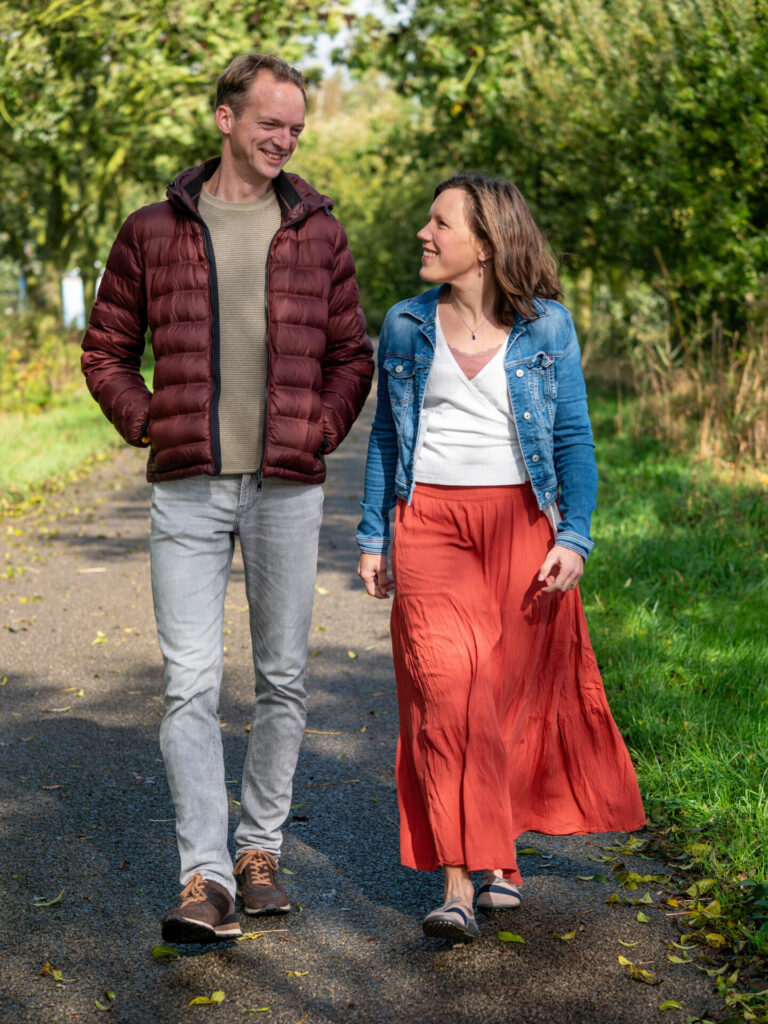
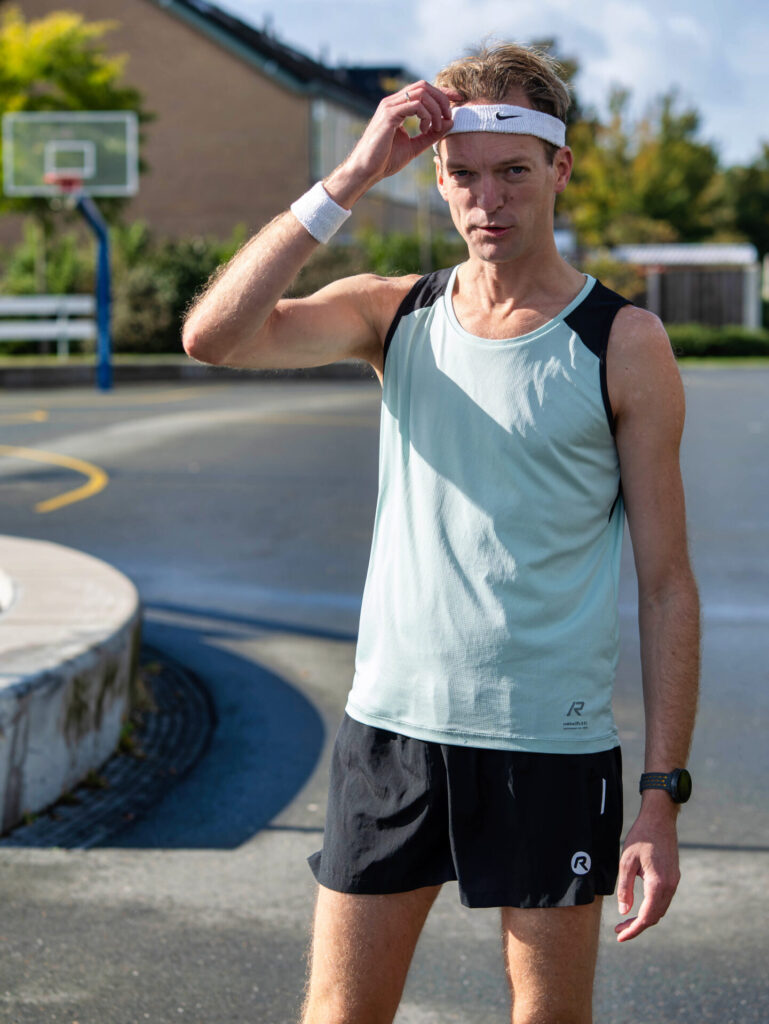
Nathan: ‘Especially learning to adapt to each other’s needs and giving each other space. We now ask each other questions daily like: do you need to go for a walk or write for a moment? This way we can often take a moment alone to recharge. What has helped me the most personally is going to therapy. Running and keeping a diary have also been factors that have helped me stabilize myself.”.
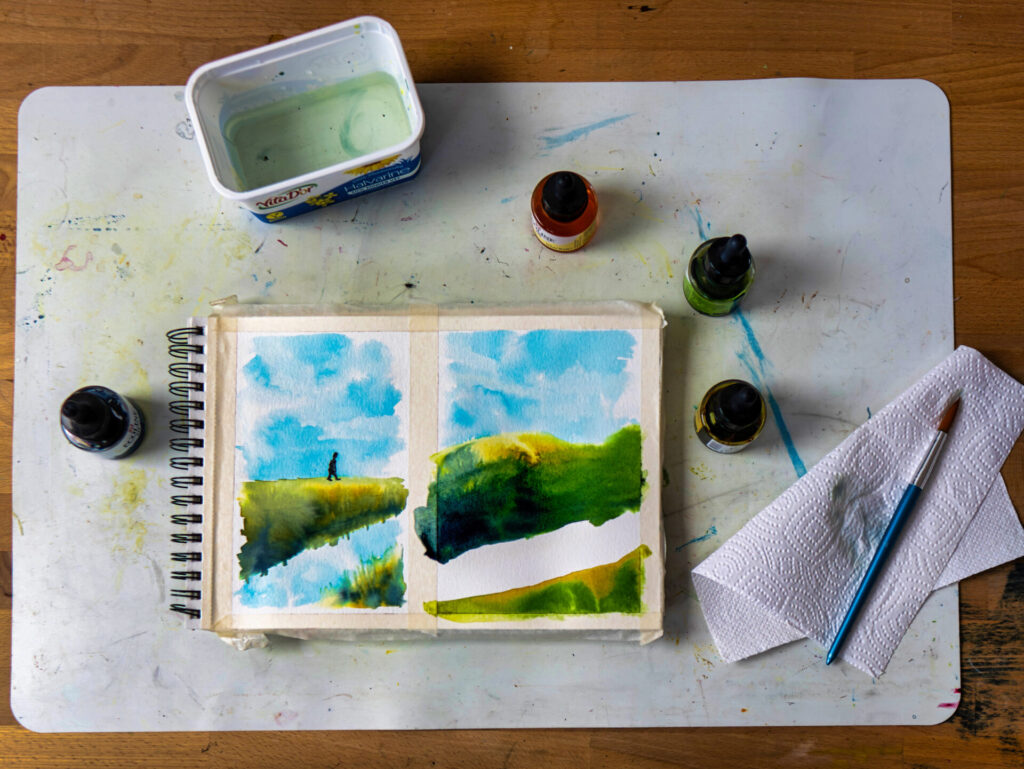
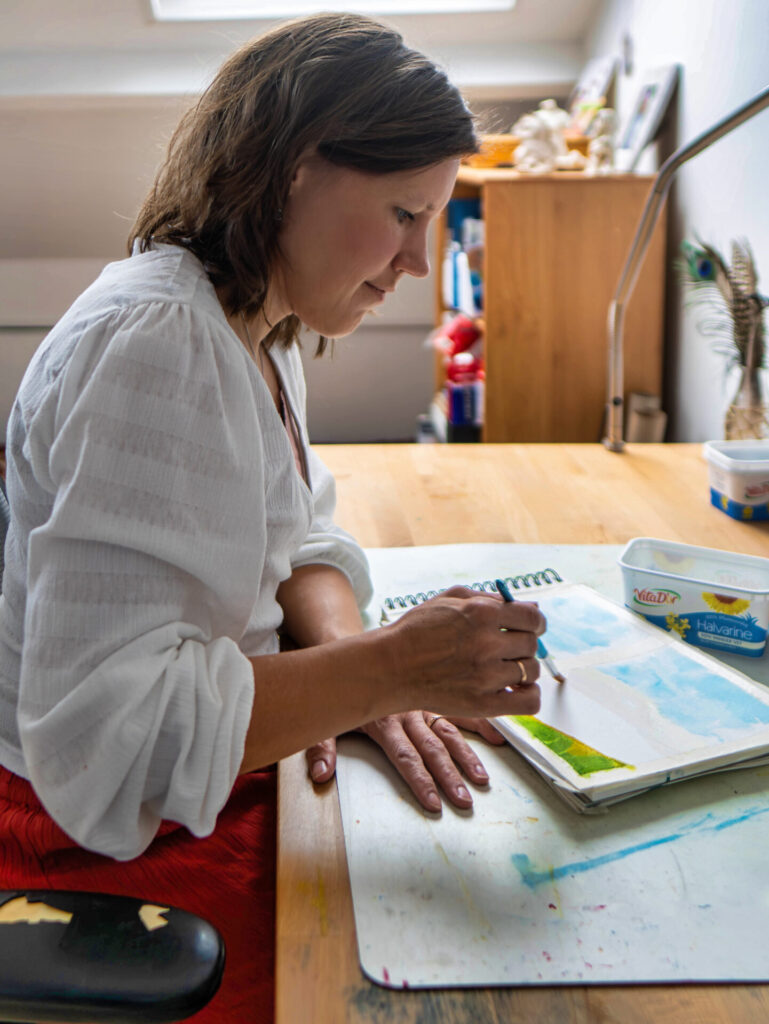
Evelien: ’Giving each other the space to find our own path in this process has been the most important thing. When it really got too much for both of us, we went on separate trips. That did us all a lot of good. It was nice to be out of the situation for a while and recharge. Continuing to lead our own lives and do our own things, which can also be a hobby, is what I would recommend to anyone close to me. Just as seeking contact with fellow sufferers. For me, creativity, especially drawing, has also been an important outlet.’
And you have written a book, the Lost Hug Brigade, a therapeutic picture book to help parents and children talk about the trauma that a parent has experienced.
Evelien: ‘Yes. Writing the book and drawing the illustrations were also something that gave me direction and support in retrospect. Initially, I made the book for myself and for our children. When contact with Nathan’s parents ended, our children lost their grandfather and grandmother. Especially our middle daughter, a deep thinker who was 7 at the time, asked many questions about it. I couldn’t find a suitable book about this topic, so I wrote it myself. The Lost Hug Brigade is based on our own story and at the same time very universal, which makes it very relatable to readers. One reader said: it’s a gem that emerged from all the misery.’
Nathan: ‘Evelien’s book is definitely something beautiful that has emerged from the process over the past few years. Just as I discovered running. But I don’t want to give a positive spin to trauma. In essence, it is pointless and should never exist. I especially hope that my children will never have to experience it, and that is why I am fully committed to this alone and together with Evelien.’
3X Favorites of Nathan and Evelien
Booktip by Nathan and Evelien
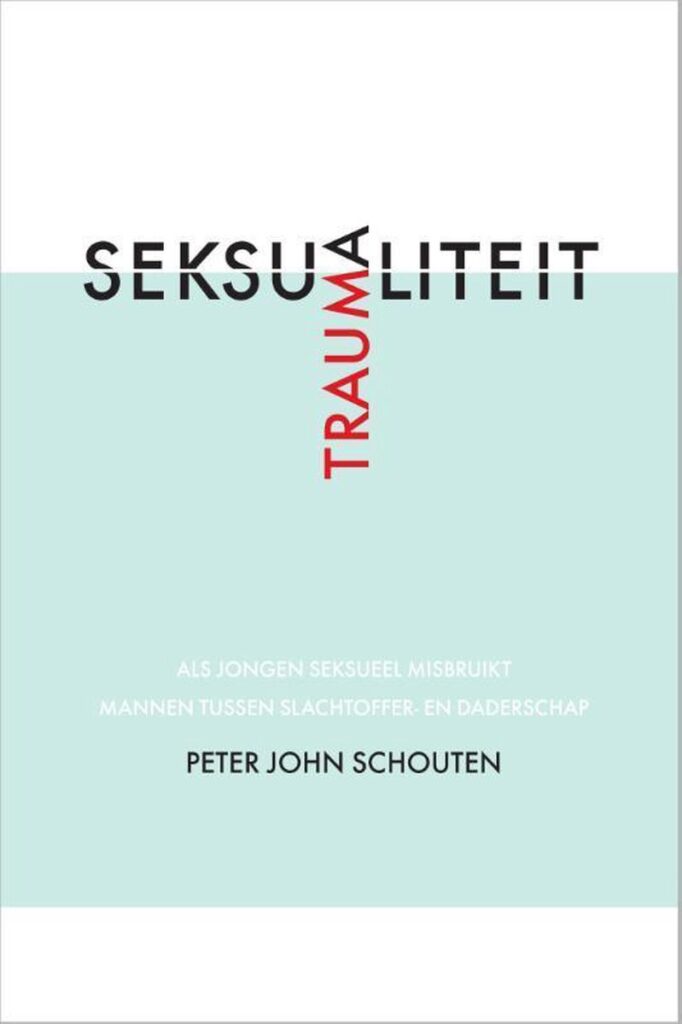
Traumatic sexuality - Peter John Schouten
Nathan: ‘The book Traumasexuality Is a book that was immediately handed to me at the beginning of my processing journey. The book painfully outlines the damage caused by sexual abuse. It was one page read, too many things to recognize, putting the book down and then continuing to read the next day because it was time to go home.
Evelien: ‘This book is also highly recommended for those close to you. It gave me insight into the process that Nathan and I went through together. The theory has also been an inspiration for my book.’ The Lost Stuffed Animal Brigade.’
Source of inspiration for Nathan
Nathan: ‘In the first months of my recovery, I benefited a lot from the Psalms (a collection of poems and prayers from the Bible, ed.). In particular, this passage from Psalm 61 was a source of inspiration:
Watch over my prayer,
Now that my heart is failing, lead me to a rock that would be too high for me.
For you have been a refuge for me
I will take refuge in the shelter under your wings.
Charger by Evelien
Evelien: ‘Creativity, especially drawing, has been an important outlet for me in recent years. I do it almost daily. When I was completely stuck in my thoughts, intuitive coloring and scratching brought back movement, direction, and visibility. On paper, you can get your feelings out, where words sometimes fail.’