What is your experience with trauma?
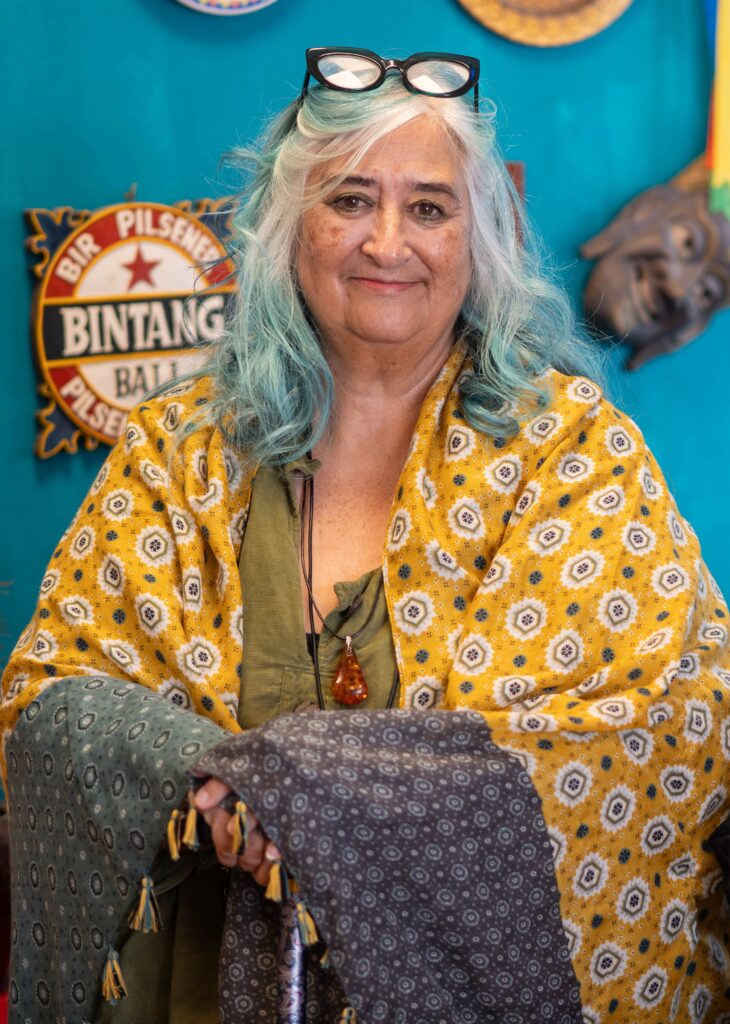
‘My family is full of trauma. My grandparents lived through the First World War and my parents experienced the Second World War themselves. They are doubly damaged. My mother, who is of Dutch East Indies descent, was in a Japanese concentration camp in Indonesia during WWII. As a young boy, my father was hidden with a farming family in the Netherlands because his parents were in the resistance, which was extremely risky. Being a troublemaker and having understanding for the diverse people who exist are in my DNA.
‘In my family of origin, a variety of psychological and neurodiverse characteristics were present: unipolar and bipolar disorders, autism, and high intelligence. For a long time, I considered that to be normal. As a child, I knew no other reality. My mother carried heavy war traumas from the Japanese internment camps. My father was highly gifted and bipolar. For years he struggled with alcoholism and suffered from recurring depressions during my youth. Within that family, I took on a supporting role at an early age. I acted as a stabilizing factor and took care of my parents and my younger brother and sisters, often as a matter of course.
‘Despite all the traumas my parents carried with them, they were also the ones who shaped me positively. Especially my father, who taught me to play chess when I was only four, taught me to read at age five, and greatly encouraged independent thinking. When he walked with me to the first grade of elementary school, he said: ‘Nanetje, remember that adults are not necessarily right. Always keep searching for your own truth.’ I have remembered that my whole life, and it has been and remains the common thread.’
How has this background influenced your career?
‘It has kept me quite authentic from a young age. I was fifteen when I went to the high school principal and told him, ‘I think I'm going to leave school, because I'm not learning anything here.’ He replied that he couldn't really say it, but in my case, he agreed with me. Without telling my parents anything, I quit school. Later on, I completed several other educational programs, such as hotel management school, a floral design training, and a course to become a rational emotive therapist. Because my parents instilled in me the belief that life is what you make it, I had enough confidence to change careers again and again.
‘Even as a teenager and in my twenties, I still barely realized to what extent my family was characterized by what I later came to call ‘fluff.’ By fluff, I mean the diagnostic labels from the DSM, labels that rarely stand alone and are often rather the result of underlying traumas. At the same time, back then I was already intensively studying psychology and psychiatry. I read books like The Drama of the Gifted Child by Alice Miller – which made me wonder if it was about me – and one of my enduring favorites: Who is made of wood... by Jan Foudraine.
‘In the 1970s, Foudraine was a well-known psychiatrist who wanted to turn everything upside down. He was vilified in the Netherlands and then went to America. There, in a clinic, he was given the opportunity to remove all institutionalization. All the nursing staff were no longer allowed to wear white, but just wore jeans and—I don't know, T-shirts. No one was served coffee or tea anymore, they just let them smell it, but from then on you had to get it yourself.
‘It was so insane! People were taken out of their patient roles and some were able to leave the clinic after thirty years and live on their own again. I learned a lot from Foudraine's philosophy. You could say that his ideas form the basis of the vision of Dig Out, the youth center that I founded in 2008.’
How did you come to found Digg ’Out?
‘That was because of my oldest son, a very fascinating, interesting, and gifted person with quite a few quirks. When he was twelve and we had just moved with our family to Almere, he dragged home anything and everyone looking for shelter and company. So we regularly had five or six extra diners at the kitchen table.
‘Those were always boys with a complex background, often from broken families. When one of those boys said he had become a ‘drop out’ because he had to take a ‘time out’ from school, a switch flipped in my mind. It surely cannot be true, I thought, that in such a situation you write 'troublemaker' on someone's forehead with a permanent marker?
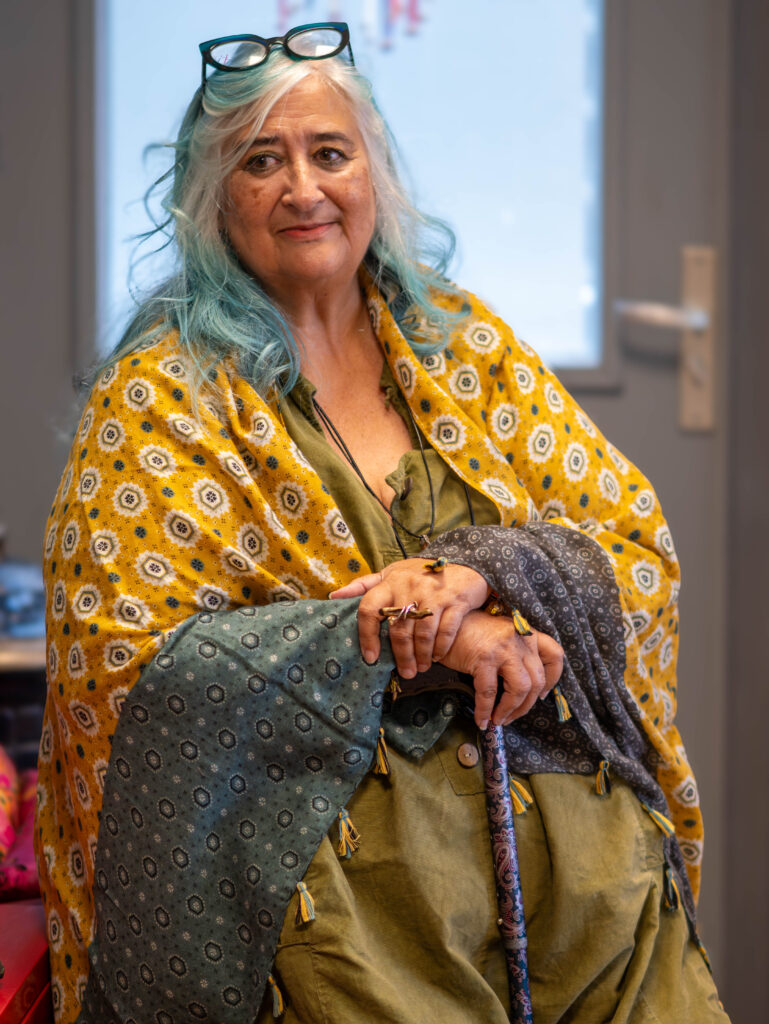
‘Then at that same kitchen table I started Digg ’Out, a place for young people who fall outside societal frameworks. Young people who drop out—the troublemakers and rebels—who are often marked by trauma and be surrounded by various labels. At Digg’Out, they are given the space to recover, to develop skills, and in this way to find their place back in society step by step. Over the years, I have guided hundreds of young people. I have taken those kids into my heart and have continued to fight for them time and time again.’
In what way did you fight for them?
‘By constantly having to make it clear to all that mental health care and all those agencies that it's not about labels, rules, and protocols, but that the young people themselves must be the central focus. My aversion to the current mental health care system in the Netherlands is enormous. Making genuine human contact is lacking. While it is so important to know where someone comes from and what someone has been through.
‘The young people I work with often think and live differently. As a result, they cannot adapt to society. But have they lost their way, or are there simply not enough routes available? I think the latter. Because of the dropout that this causes, many of these young people also get the feeling that they are not needed. While every human being has a need for that.
‘Why do you think more and more young people are taking their own lives? Because they are not needed. All the attention in those care and euthanasia trajectories is about: how can I Play Help? That makes my stomach turn. That is completely wrong. You should shift the focus instead and tell those young peopleyou needed.
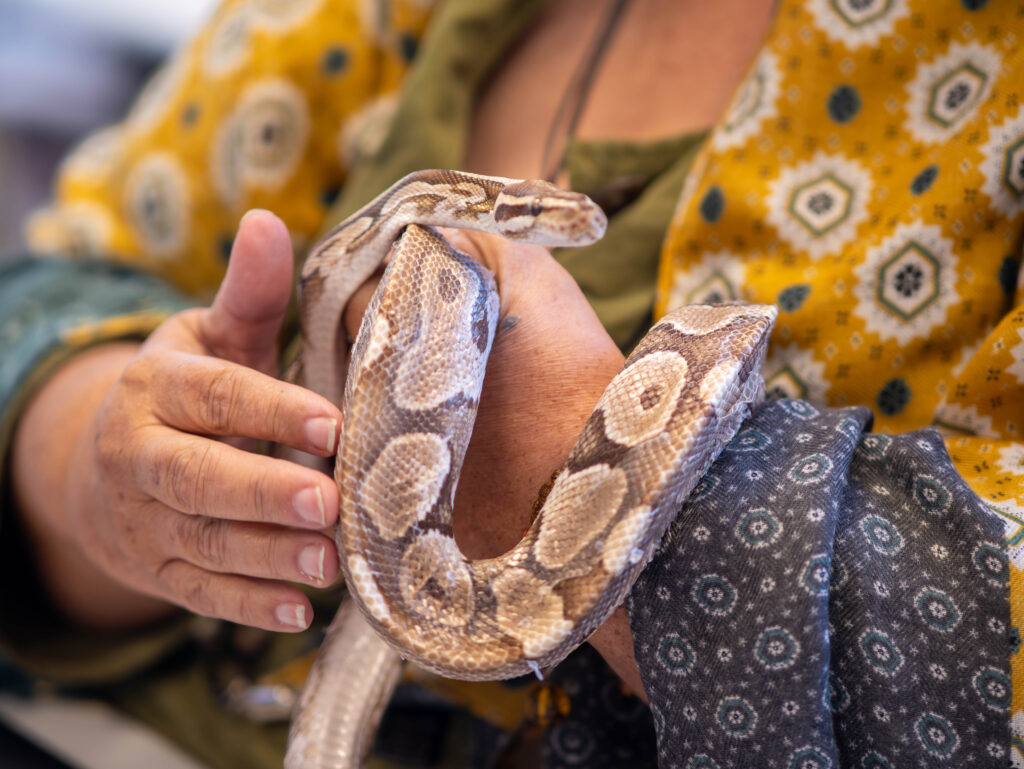
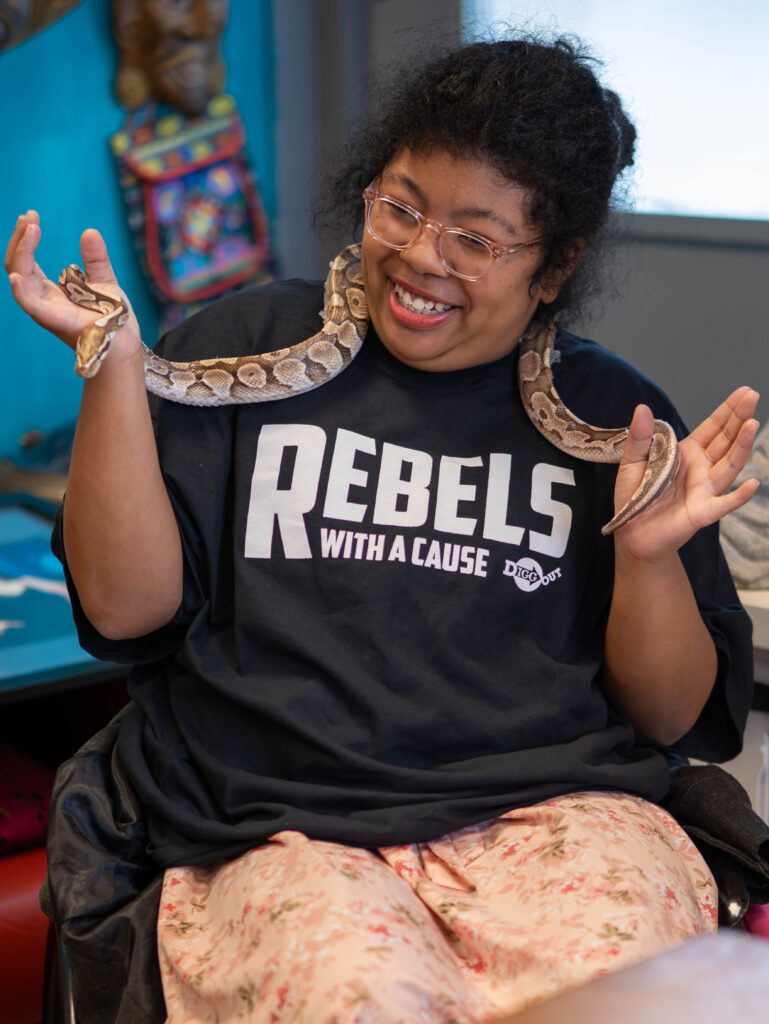
‘Attention and shifting attention is everything. But nutrition, exercise, going outside, and creative expression are also important. I have teenagers with anger issues take up crochet, so their hands have something to do as well. And over the years at Digg ‘Out I've had quite a few snakes, which I used as therapy. Some young people sat here on the floor next to me for hours, silently stroking a snake. I would just let them sit there and continue with my work. And then, after two or three weeks, the stories would come out naturally. My personal strength, I think, is whispering away. Leaving trauma where it belongs. Not trivializing it, but exploring together if and how you can make it lighter at certain points.’
How have you managed to stay upright all these years amidst so much trauma?
‘I don't know that for sure. I think I have a gigantic sense of perspective. I am very solution-oriented and find difficult people the most fun target group to work with. And when you see that your approach works, that is fantastic, of course. For example, I think of a former client, a boy who back then routinely kept an overdose of sleeping pills at home and now has a family and is happy as an artist. There are many success stories like that. But at the same time, things don't always turn out well, of course. Over the past seventeen years, we have also lost quite a few young people who took their own lives. I will never get over that. Because I always feel like I forgot something.
‘Since Corona, I have been spending a lot of time with my family in Greece. The first winter there, I crocheted my brains out on a balcony overlooking the sea. When I stopped taking care of others and came to a standstill, I noticed that my personal resilience was gone. Perhaps that was the first time in my life I had time to think deeply about myself. I always thought I didn't have any trauma myself, but since that first winter on the mountain, I see that isn't true. For example, I am very distrustful and avoid conflict; that clearly stems from my childhood.
Yes, maybe with Digg ‘Out I created the environment I already knew as a little girl and a new phase with new resilience is now beginning.’
3X Nanette's Favorites
Book recommendation
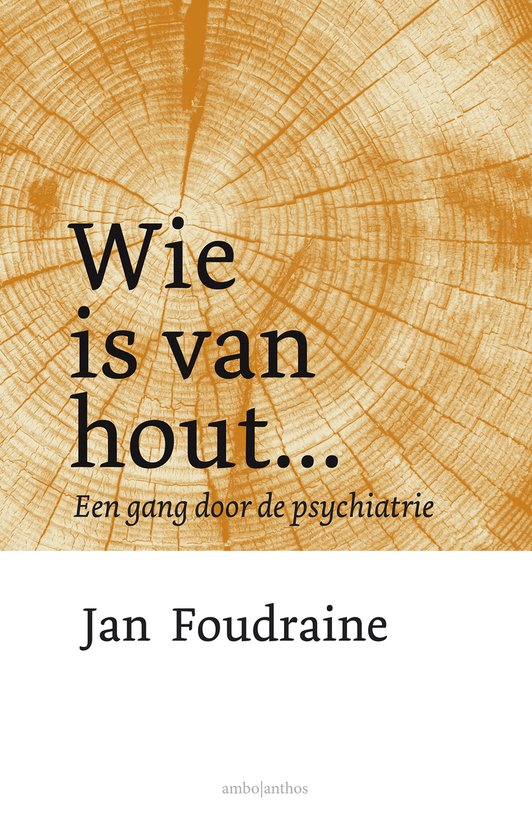
Who is made of wood - Jan Foundraine
‘Who is made of wood… taught me to look critically at systems that reduce people to diagnoses or roles. Not tomorrow, but now reinforced my belief that true change begins with inner responsibility, awareness, and living in the present moment. Together, these books form my core: humanity above system, and personal responsibility as the basis for freedom and growth.’
Source of inspiration
Greetje Becker Jansen
‘My main sources of inspiration are my parents and grandparents on both sides. Despite wars, loss, and trauma, they remained remarkably resilient, dignified, and humane. My Dutch grandmother Greetje is a particular source of inspiration. At sixteen, as the eldest of seventeen children, she left for England alone to learn English. She was at the forefront of women's emancipation and consciously chose to cohabit in 1930. From her, I learned: learn from many, but remain yourself. Or as the Indian philosopher Krishnamurti says: ‘Be your own guru.’
Charger
‘My chargers are my husband, my two sons, and my two sisters and brother. The unconditionality in these relationships says everything. With my soulmate, whom I have been with since 1972, I sometimes clash quite firmly, and precisely that opens up new perspectives. My sons are sharp, intelligent, and challenge me daily in thought and feeling. The bond with my two sisters and my brother is also special. We each carry our own silent traumas – from different perspectives, but connected and always supportive.’