What is the structural dissociation model?
When you are exposed to stress, insecurity, or overwhelming experiences for a long time, it can feel as if you are not experiencing yourself as a whole. You may function separately from your emotions, thoughts, and body. You may also feel as if there is little coherence within. You will then experience many conflicting impulses or thoughts. Staying true to yourself is often difficult or you don’t know who you are.
You may notice that part of you can often function very well in everyday life, while another part can suddenly be overwhelmed by emotions, memories, or bodily reactions. This can be experienced as confusion or inner conflict. Why am I reacting like this, when I really don’t even mean it that way? Or: why am I feeling this, when there doesn’t seem to be any reason for it?
The structural dissociation model* as described by trauma expert Janina Fisher can help you better understand yourself and your experiences. There is nothing ‘wrong’ with you. In unsafe circumstances, human behavior is appropriate. brain When experiences are too big, too threatening, or too long-lasting to be processed in one whole, different parts of you can actually develop separately from each other. Each of those parts has its own way of surviving and going its own way.
The part that normally continues
The part of you that ‘just’ goes on is called the structural dissociation model. Apparently Normal Part (ANP) called it. Janina Fisher also calls this the ‘part of the self that normally goes on’. This is the part that tries to make life as good and ‘normal’ as possible and is good at continuing to go on. It gets up, goes to work or school, takes care of others, arranges practical matters and tries to keep an overview. Sometimes it does this by keeping feelings at a distance or avoiding them. How strong and for how long this happens varies from person to person.
Even if you have the impression that at some moments you hardly function – for example because you are overwhelmed by emotions or bodily reactions – the part that is still functioning normally often goes on anyway. This is the mature part within you that corresponds to your chronological age and that usually possesses the skills that go with it: thinking, planning, taking responsibility, and being able to take a more balanced perspective.
At the same time, this part can sometimes feel strange or unreal. As if you are playing a role. As if you are doing what is expected of you, but it doesn’t really feel that way on the inside. You may then have the experience of your normally functioning self being one big show. However, that does not mean that this part is fake. It is a part that has learned to function, often under difficult circumstances.
Just when overwhelming emotions or strong physical reactions come to the fore, the contrast between the mature functioning part and the other parts within you becomes greater. Then it can seem as if something is fighting against or alternating with the other parts within you. This is often the moment when it becomes clear that there is more at play than just ‘just getting on with it’. Besides the normal surviving part, there is also a traumatized part that can consist of different survival parts that can sometimes become active.
The traumatized part and the survival parts
The structural dissociation model explains that these survival parts (also known as emotional parts named) They were created in times of overwhelm or insecurity within you. It was their task to protect you from danger. These survival parts often carry intense emotions, memories, and bodily reactions, which are connected to what you have experienced in the past.
Bee triggers These survival parts react as if the danger of the past were still present. They then ‘take over’ your normally surviving self and bring you back to the overwhelming and unsafe moments from the past. These parts are still stuck ‘in the then and there’. They have the calendar age you had at that time and constantly experience feelings of fear, shame, anger or sadness.
If you are triggered, this may mean that you have difficulty regulating emotions and behavior, that you have difficulty staying in the present moment, or that you struggle with inner conflict. If an survival part is active, your bodily reactions are largely controlled by the brain: you can fighting, fleeing, freezing, submitting to them or making them dependent on you.

You may also experience sudden mood swings, internal conflicts, or strong physical reactions, feel like you’re ‘out of control,’ or struggle with self-criticism and shame. Sometimes this feels so overwhelming that it almost seems impossible to get a grip on it. For some people, this means that they developing destructive behavior or addictions, in an attempt to deal with this.
Self-compassion and recovery
If you recognize yourself or a loved one in the above descriptions, just this recognition can be helpful. The realization that the survival parts were created to protect you and largely function outside your conscious mind often reduces shame, self-blame, and self-doubt. This allows you to develop more compassion and understanding for yourself or for another person.
It is important to know that the presence of survival parts is absolutely not a weakness. It is an adaptation that has helped you cope with difficult circumstances in the past. It is a sign of survival strength. Curiosity and kindness help much more than condemnation.
If you suffer from survival parts, it is good to know that recovery is possible. Through various forms of trauma therapy You can investigate why and how the various survival parts originated and what function they once served. By working through and integrating the traumatic events or the chronic insecurity underlying them, the survival parts can be freed from the task they once assumed and there is room for recovery, connection, and greater inner harmony.
Read more about the structural dissociation model?
Do you want to understand more about how your survival responses evolved or how to deal with your survival parts? The books below can help you further.
Book recommendation
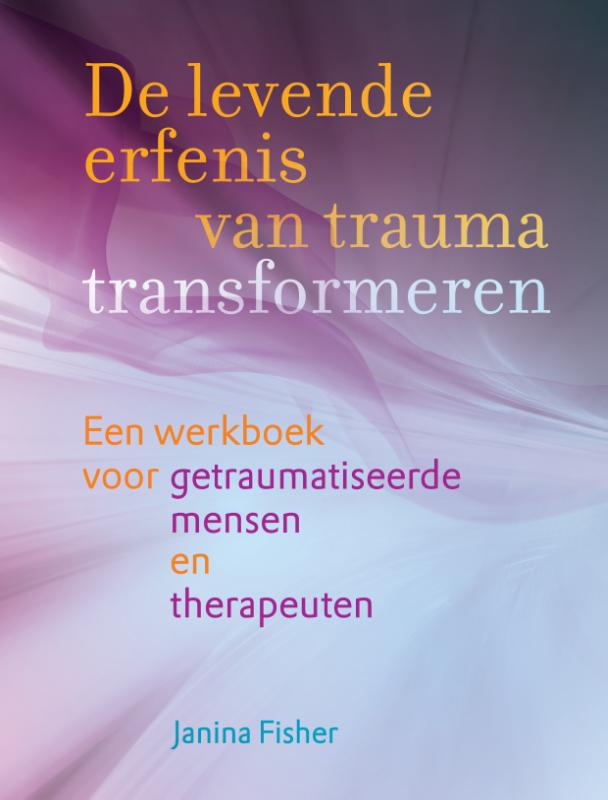
Transforming the Living Legacy of Trauma - Janina Fisher
A workbook for traumatized people and therapists
Book recommendation
Overcoming inner self-alienation after trauma - Janina Fisher
Distinguishing and uniting personality parts