The triune brain
One way to understand how the brain reacts to stress and danger is through the triune brain model by neuroscientist Paul MacLean (1967). He described the brain as being built of three layers that, from an evolutionary perspective, have grown on top of one another. Although the model provides a simplified representation of reality, it is a useful model because it offers an accessible way to understand how the brain works and the impact of trauma on the brain.
The triune brain consists of:
- The reptilian brain: survival
This is the oldest part of the brain, located in the brainstem. It controls automatic body functions such as breathing, heart rate, and muscle tension. In acute danger, this part takes over and activates a survival response. - The mammalian brain: feeling and connecting
Above the brainstem lies the limbic system, which is involved in emotions, memory, motivation, and social experiences, among other things. The amygdala and hippocampus, two brain regions that are explained further on, are part of it and are strongly influenced by stress. - The thinking brain: understanding and regulating
The youngest part of our brain is the neocortex, with the prefrontal cortex as the most important area for reasoning, planning, regulation, and self-reflection. Broca's speech area is also located in this region and is involved in speech and language.
When there is no danger and you feel calm, the different brain regions work well together. But in times of high stress, such as during a major event or chronic insecurity, the reptilian brain takes the wheel. The reptilian brain does not think, it acts. The higher parts of the brain are then temporarily shut down in order to survive. In the short term, this helps to survive, but in the long term, it can cause persistent tension, startle reactions, and a smaller Window of Tolerance.
Brain areas affected by stress
There are four brain regions in particular that are strongly influenced by stress.
- The amygdala: the alarm bell
The amygdala constantly scans whether something is safe or unsafe. When danger is detected, the amygdala sounds the alarm and sends stress signals throughout your entire body. This happens at lightning speed, without the intervention of your thinking brain. It helps you to survive – but also ensures that your body and mind can remain in a state of readiness for a long time. - The hippocampus: memory and sense of time
The hippocampus helps to organize experiences in time and context. Under stress, this area functions less effectively, causing memories of traumatic events to sometimes be stored as disconnected pieces: images, sounds, or feelings without a clear beginning or end. When such a memory fragment is triggered later, it can feel as though the past is repeating itself in the present. - The prefrontal cortex: the thinking brain
This part of your brain is responsible for functions such as concentrating, planning, logical thinking, and regulating your emotions. Under high stress, this area partially shuts down. That can mean that at such a moment you have difficulty thinking, are overwhelmed by emotions, or feel nothing at all. Afterwards, it sometimes feels as if you ‘was not there’ or you do not recognize your own reaction. - Broca's area: language and speech
The Broca's area is involved in converting thoughts and feelings into words. During or shortly after a traumatic experience, this area often becomes less active. That explains why many people are ‘struck dumb’ at such moments or find it difficult afterwards to recount exactly what happened. Being able to put things into words is often also difficult(er) when you are triggered, dissociated or are experiencing a flashback. Even then, Broca's area is often less active. You then literally fall silent. This is not unwillingness, it is an automatic reaction of the brain in survival mode.
Only when the nervous system calms down and your internal alarm bell stops ringing does there often arise space again to talk, reflect, and give meaning to what has happened.
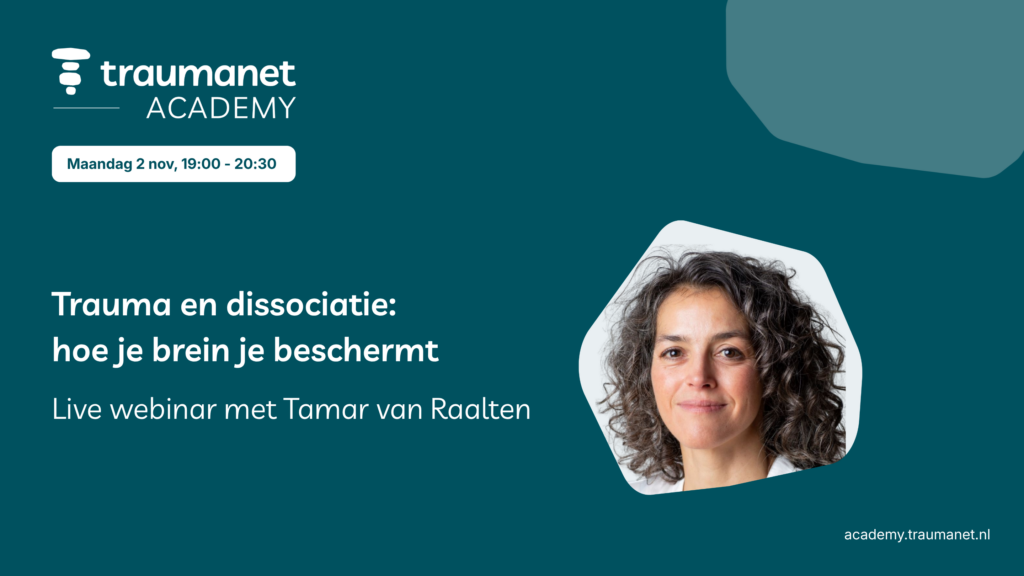
Webinar: 2 november 2026, 19:00 uur
Trauma en dissociatie: hoe je brein je beschermt
In conversation with Tamar van Raalten

What can you notice in the long term?
If you have experienced a major life event, you can nervous system stay out of balance for a longer period of time. Your stress system then remains, as it were, ‘on’, constantly on the lookout for potential danger. This also affects your brain and can cause various symptoms, such as:
- Easily startled or constantly tense
- Difficulty concentrating or sustaining your attention
- Experiencing intense emotions, or feeling very little
- Memory problems or blackouts‘
- Trouble making choices or decisions
Deze klachten zijn geen teken dat je gek bent of ‘stuk’. Ze zijn een logisch gevolg van een systeem dat alles op alles heeft gezet om te overleven, en sindsdien moeite heeft om te ontspannen.
The brain is flexible and can recover
The good news is: our brain is flexible. It can not only adapt to stress and unsafety, but also to rest and safety. Recovery is possible, step by step, at your own pace, and where necessary with the help of others. Various forms of trauma therapy can support you in this, just like our Resources which contribute to more regulation and you increase resilience.
Understanding what is happening in your brain is also an important step in any recovery process.
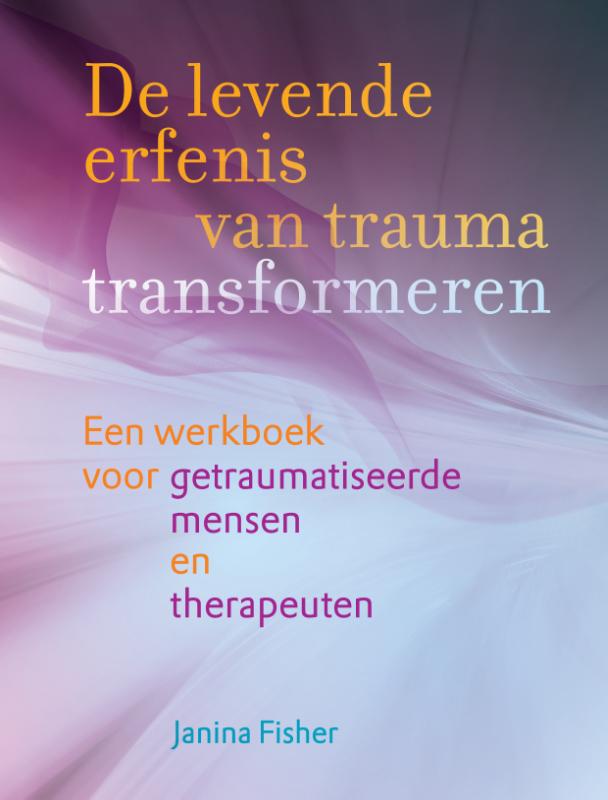
Reading tip
Transforming the Living Legacy of Trauma - Janina Fisher
A workbook for traumatized people and therapists
More about this topic