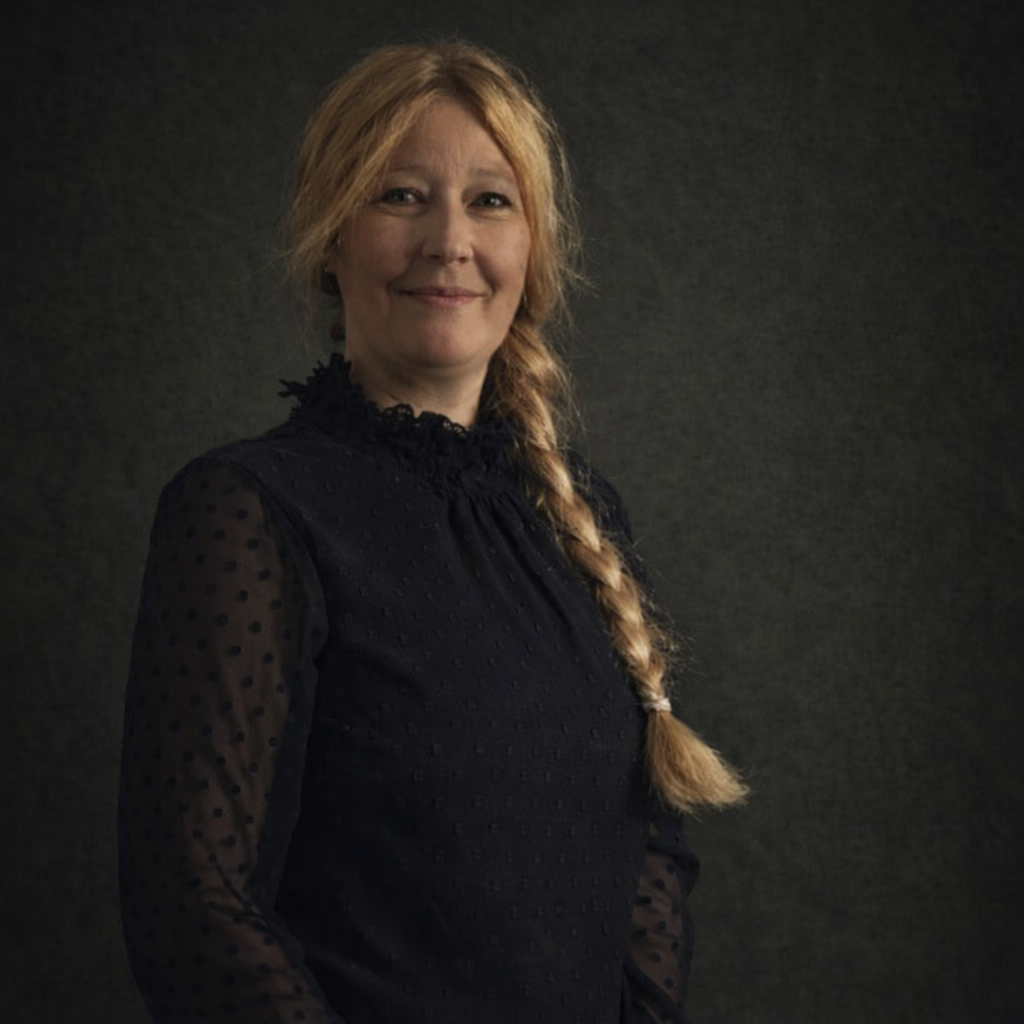
On a non-profit basis, she is sharing her book The soiled nest and the poetry collection Silent tears, provides expertise development for healthcare professionals, conducts long-term research work, writes poetry and exhibits. José understands from within what growing up, living and surviving with early childhood chronic trauma can mean.
‘By nature I am not a team player. Yet I sometimes stand on a stage in front of 350 people. Until the end of 2025 my agenda is full of meetings. Because of my mission, I can build that movement.
I have a higher goal than telling my personal story. I am honest, I dare say. I always ask myself: is it important for the greater whole? I also feel a sense of purpose in my mission. It resonates with many people.
The first hour during a gathering, it is always foggy in my head. Then I do it on experience. I have two illnesses that are prone to relapse. Epilepsy and MS. My health is so erratic. I then trust that the sun will shine again in me so that the fog will lift, and that always happens. That comes from something bigger. And that larger part is partly from me. In that part I am carried along.
I feel that I don't have to do it alone
I relive again and again what I am going to share, show, and do. That time of absorption continues throughout my body. I create rest time before and after a training session. I also ensure there is a delay, rest, and space at the training location. Nowadays, I organize everything close to home, in an old farmhouse in Sleen. I feel at home there. Traveling takes so much from me. I only do it at very special gatherings.
I had developed something very beautiful. A two-day ‘Trauma Setups from Transgenerational Trauma.’ Together with five participants, I worked intensively on the motherline, fatherline, brothers, sisters, and pets. I wanted to give the participants the opportunity to really get out of the way. That’s why I chose such a small group.
But during this intense two-day event, an old part of me was awakened. The role of a rescuer. It took me four days to recover. And giving goes at the expense of myself. This two-day event was already fully booked a year and a half in advance. I’m not giving it anymore. There needs to be balance in order to be able to do it well.
Giving and being ready is a secondary stress response From my childhood. If I didn’t open up to the other person, the evil became even worse, and the darkness even darker.
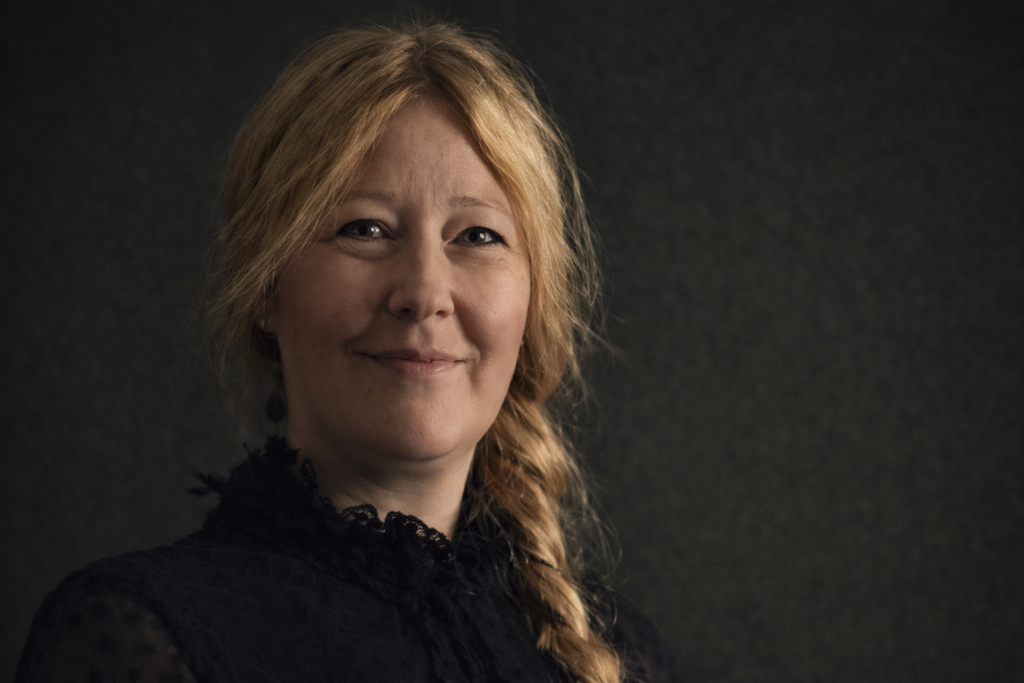
Feeling that I am reaching out and leaving, but also coming home to myself again
It is important to remain in harmony. Otherwise it does not flow within me and also within the groups. Coming home is my starting point.
Once a month a group of people comes to see me for the examination I perform. They are part of a group of two hundred people. The youngest participant is now 25 and the oldest 89.
I am constantly doing research. It never stops. It started in 2018. Officially, that is when it started, because I really had a question related to it at that time. But actually, it started a lot earlier. I am very interested and research-oriented by nature.
These people grew up just like me in a dirty nest.
A nest with early childhood trauma, (inter)generational trauma, child abuse. We were born into a sense of tension, loneliness, and insecurity. We grew up in the shadows.
I follow these people, and they follow me. We have built trust with each other. There is a foundation of belongingness, to ourselves and to each other. Also because they have undergone therapy with me.
Every month, we discuss a theme together. We share. We exchange ideas. There is a great deal of respect between us; we treat each other with integrity. I will never ask anyone a question that I haven’t already asked myself and experienced. At the end of the meeting, I always ask the participants: what is the core of what this day has brought you?
It is a living, organic research
I rarely write anything down. That stagnates. I have a sharp and good memory. Afterwards, I write, or draw, paint, or write poems. I’m a traditional coffee filter. It has to settle first. But there’s always a pebble in the pond.
I work very structuredly. That has to be the way. Otherwise I can’t accomplish what I do. I have a photo of my good friend Marlé on my desk. She passed away two years ago. When I create something, and it doesn’t work out for a while, I light a candle. In complete silence, I make contact with her. Then I feel like I’m lifted up a little.
In the creative room in my head, I am once again writing a book about my developed method Beeldta-AL. But the door is not yet open.’
Book recommendation
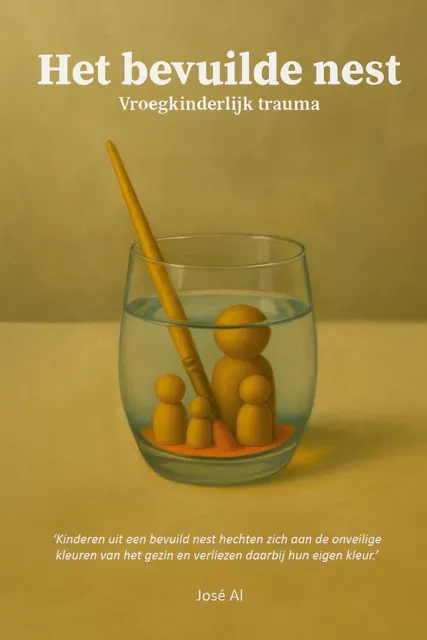
The polluted nest - José Al
Whether you are a fellow survivor, personally or professionally involved, or simply interested, this book will leave no one untouched. The character Astrid shares her memories, experiences, and struggles with gripping honesty. In addition, the commentary, theoretical foundation, and research results paint an unvarnished, razor-sharp picture of the world of victims, silent witnesses, and perpetrators, as well as the lifelong consequences of growing up in stressful unsafety due to all forms and colors of child abuse—whether this involves passive or active forms of abuse, neglect, and domestic violence.