The summer vacation can be extra tough if you have trauma symptoms
For many people, the summer vacation is a period to look forward to. The sun is shining, the pace is slower, and going on vacation is the ultimate enjoyment for many. For people with trauma symptoms, however, this can be very different.
That is why throughout the entire summer period you can expect extra blogs, tips, and tools surrounding trauma, healing, and the summer vacation. Follow our social media channels for the latest news.
Blogs and articles

Glinsteringen: discover the power of small moments with great meaning
With trauma symptoms, your nervous system can become accustomed to focusing primarily on potential signals of danger. As a result, pleasant or safe moments can sometimes more easily fade into the background.
A glimmer is such a small moment when you experience a sense of peace, joy, safety, or connection. For example, the sun on your face, a friendly message, or having to laugh for a moment.
It is not about making difficult feelings go away. However, it can help to also pay attention to what feels pleasant, familiar, or safe at this moment.
In this article you can read more about glimmers and you will find a small exercise to notice them this summer.

Blog: Liberation
In her blog, Janita writes about inner storms, the exhausting quest for control, and the moment you begin to understand that your reactions are not random, but stem from what you have experienced.
About the liberating truth that it was never your fault. And about how, from that realization, you can step by step find your way back to who you always were.

Four tips for sleeping in an unfamiliar (vacation) place
On vacation, you suddenly sleep in a different room, in an unfamiliar bed, and amidst unknown sounds. For people with trauma symptoms, such a new environment can cause extra tension. The nervous system can remain alert and keep scanning the environment, even when you know you are safe.
As a result, it may be harder to fall asleep or stay asleep. You may also experience nightmares or flashbacks. Fortunately, there are things that might help. In this article, we list four tips for you.

The therapy vacation: what a break in care can unexpectedly bring you
Many healthcare providers go on vacation in the summer. Peer support groups or other forms of assistance are also sometimes temporarily suspended.
If you have trauma symptoms, this can be difficult. Especially in a period when symptoms can sometimes increase, therapy or treatment falls away. But could this interruption unexpectedly also bring you something positive? Psychologist and trauma therapist Narda Miedema sees in her practice that a therapy interruption is often also a valuable moment of reflection and processing, and can contribute to greater self-confidence and connection.

ACT Retreat for home
‘What would make this summer meaningful for you?’
It is not the first question that comes to mind when you think of a vacation. Then we quickly think of travel, new places, sunny terraces, or long days where nothing is required for a while. Of leaving, above all. As if a vacation is only truly a vacation when you leave your familiar surroundings behind.
Not everyone is going on vacation this summer. You might be staying home on purpose, traveling is not financially feasible, or your trauma symptoms are already demanding enough of you. In that case, the summer can imperceptibly become something you dread. Especially when it seems like everyone around you is leaving, enjoying themselves, and experiencing extraordinary things.
Still, staying at home doesn't have to mean letting the summer pass you by. At home, too, there can be room for fun, relaxation, and new experiences. With this exercise, you put together a personal ACT retreat at home.

How do I get through the summer holidays? Six tips for common challenges
Less structure, more stimuli, social pressure to enjoy yourself or tension from staying in unfamiliar places. For people with trauma symptoms, the summer can be a difficult period. This became apparent, among other things, from our recent panel research.
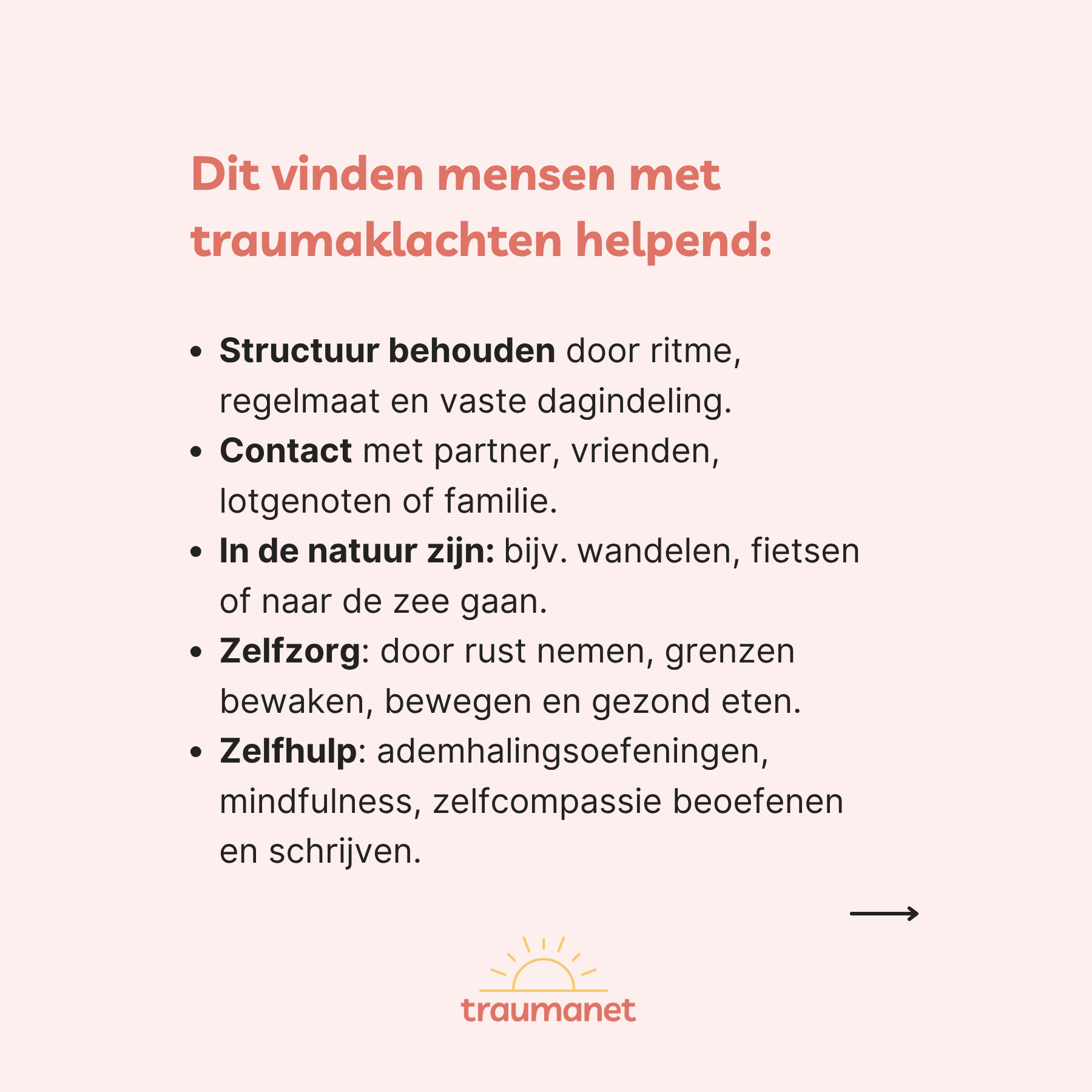
What can you do if you recognize that? In this article, we have listed six practical—and perhaps sometimes a bit unexpected—tips.

About the feeling of connectedness and safety during the summer vacation
When Dante Marleen suddenly lost her uncle, with whom she had found a safe home as a child, her summers would never be the same again due to trauma symptoms.
‘In the years that followed, due to flashbacks, crises, and rules surrounding eating, exercising, and the compulsive structure I had imposed on myself, it was no longer possible to go on vacation. And so I stayed home. Although that word ‘home’ is open to debate., writes Dante in her blog.
In this, she describes in a beautiful and relatable way how profound the impact can be for someone with complex trauma symptoms when the streets become quiet during the summer holidays, your normal routine disappears, and social contacts and activities temporarily come to a halt. But she also writes about how you can rediscover the feeling of connection and safety within yourself during the summer holidays—and beyond.

Why the summer vacation can be challenging
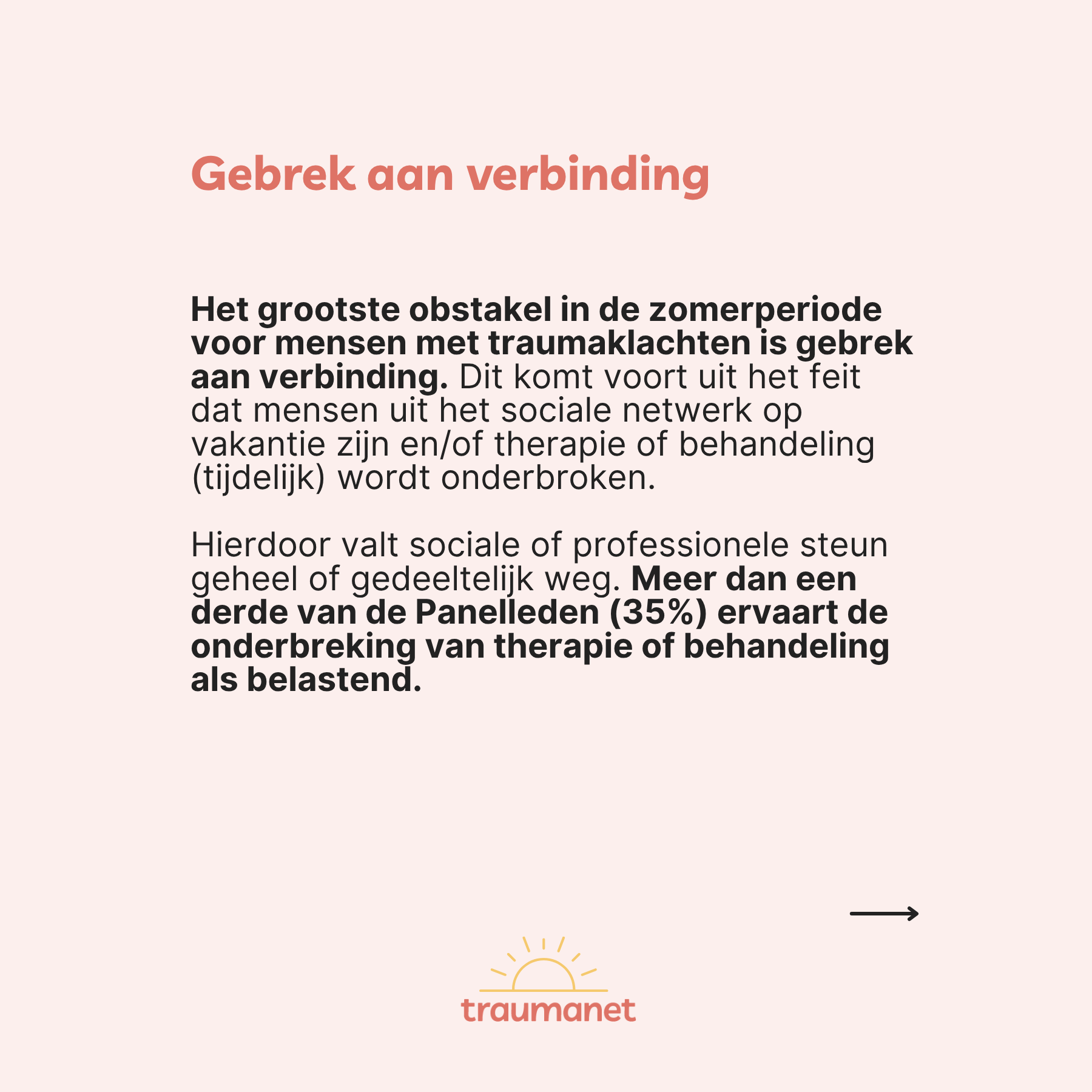
For many people, the summer vacation is a period to look forward to. The sun is shining, the pace is slower, and going on vacation is the ultimate enjoyment for many. For people with trauma symptoms, however, this can be very different. A recent survey among the Trauma Panel shows that many people with trauma symptoms find the summer period extra challenging and that feelings of anxiety, loneliness, a sense of loss, and disruption actually increase in the summer.
But why is that the case? In this article, based on a panel survey among 174 participants, we describe the seven most commonly mentioned reasons why the summer vacation can be stressful for people with trauma symptoms

Blog: Laughing in the summer
‘I sometimes wonder what image people have of someone who is traumatized. Or perhaps more specifically: of someone who has dealt with rape. Or with multiple ones,’ writes Noura Riva in her blog.
She looks back on how she experienced the summers as a teenager, in an unsafe home situation where the summer period in particular offered no escape route. Yet she smiled and laughed a lot and often – especially on vacation. To drag herself through the days. To disguise everything and keep it as invisible as possible.
What is it like, almost thirty years later? Now that Noura is still afraid of the dark and can still be triggered. But also takes a solo road trip through Europe, visiting the places where it was once so unsafe when she was a teenager.
Trauma doesn't disappear when the sun shines.
But we can work together on
more connection and resilience.

Results of panel research ’trauma, healing, and summer vacation’
Summer has now officially begun. With a heatwave and all the typical summer scenes that go with it. Many people are counting down the days until their vacation. But for people with trauma symptoms, the summer period can be particularly challenging and not necessarily something to look forward to.
To better understand this and to provide additional support to people with trauma symptoms and their loved ones, we conducted a survey among the members of the Trauma Net Panel. In the carousel below, we share the initial results of what 174 people, mostly with complex trauma symptoms, told us about their experiences surrounding the summer vacation.
Do you experience more trauma symptoms in the summer?
These practical tips and tools can help you
If you find the summer difficult, you are definitely not alone. Read the results of our panel research here
To better understand how people with trauma symptoms experience the summer period, we conducted a panel study. In it, 174 people shared their experiences. View the results in the carousel below.